After two decades of research elucidating the basic science, Tafalgie Therapeutics SA has delivered the first clinical data for its non-opioid analgesic.
In response to the continuing opioid epidemic, researchers at the Massachusetts Institute of Technology and Brigham and Women’s Hospital developed a small implantable device that monitors heart rate, respiration and other vital signs indicative of an overdose, then automatically releases a dose of naloxone.
In response to the continuing opioid epidemic, researchers at the Massachusetts Institute of Technology and Brigham and Women’s Hospital developed a small implantable device that monitors heart rate, respiration and other vital signs indicative of an overdose, then automatically releases a dose of naloxone.
In a 5-4 decision June 27, the U.S. Supreme Court scuttled a Purdue Pharma LP’s bankruptcy plan that would have discharged any claims against the Sackler family, which owned and controlled the company that made billions of dollars from its sales of Oxycontin (oxycodone).
Despite Vertex Pharmaceuticals Inc.’s mostly positive phase III study results of a non-opioid for treating moderate to severe acute pain, the data for a key secondary endpoint show VX-548 is not as effective as Vicodin (hydrocodone, Abbvie Inc.).
Mu opioid receptors (MOR) agonists exert strong anti-nociceptive activity but their ability to cause tolerance and physical dependence are serious issues of concern and limit their use. The activation of another branch of opioid receptors discovered lately, the opioid-related nociceptin receptor 1 (OPRL1) has recently shown the ability to enhance MOR agonist-induced analgesia while limiting tolerance and side effects.
How long does it take for a U.S.-based biopharma company to complete a bankruptcy? In the case of privately held Purdue Pharma LP, the answer is likely five years or longer, depending on when the Supreme Court rules on the matter and whether it orders a do-over. The Supreme Court is the next chapter in the court saga that began in 2019 when the Stamford, Conn.-based company filed for bankruptcy in its first step toward reorganizing as a public benefit company.
The opioid crisis in the U.S. has not yet been resolved, but FDA commissioner Robert Califf said April 19 the agency could do more to resolve the crisis if Congress granted the agency the authority to require that new opioid analgesics offer superior safety relative to currently approved products. Califf laid the blame for the crisis on manufacturers in stating that drug makers had “let us down” in failing to develop novel oral analgesics that avoid the addictive properties that helped to fuel the opioid crisis.
Chronic inflammatory and neuropathic pain are among the most common chronic conditions, but their treatment options present significant limitations both in efficacy and safety. Researchers from Purdue University presented data on their work aimed to develop adenyl cyclase type 1 (AC1, ADCY1) inhibitors as a new treatment for chronic pain.
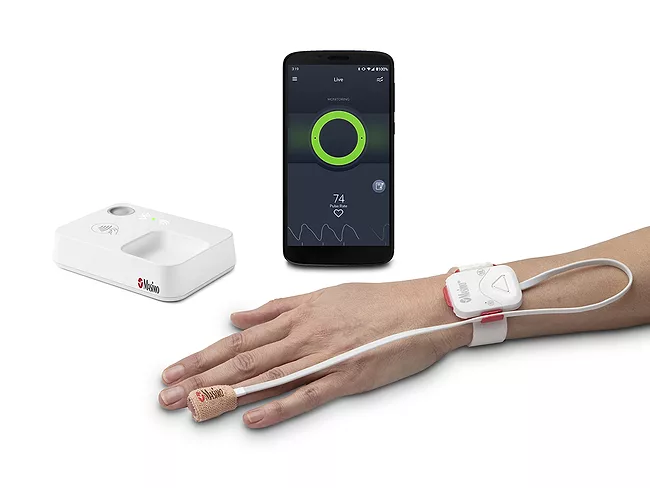
Masimo Corp.’s Opioid Halo, an opioid overdose prevention and alert system, was granted de novo status by the U.S. FDA. The device detects opioid-induced respiratory depression, the primary cause of opioid deaths. The de novo authorizes the company to make Halo available over the counter and by prescription for use on individuals aged 15 and up.