What could be the first newly approved antifungal in nearly 20 years based on a novel mechanism hit a bump as F2G Ltd. has received a complete response letter from the U.S. FDA.
The U.S. FDA issued a complete response letter regarding the BLA for Immunitybio Inc.’s bladder cancer treatment, N-803 (Anktiva), halting the drug’s development and slicing the stock value in half. The problems stem from the FDA’s pre-license inspection of Immunitybio’s third-party contract manufacturing organizations, the company said. It said the FDA also had recommendations for specific chemistry, manufacturing and controls issues and assays that needed to be resolved before the BLA can be approved.
It’s not often that getting an NDA rejected by the U.S. FDA is cause for a company’s stock to rise. But in the case of Ascendis Pharma A/S, the agency’s anticipated complete response letter (CRL) for Transcon PTH (palopegteriparatide) offered some much-needed clarity and a potentially optimistic time frame for an NDA resubmission seeking approval of the once-daily hormone replacement therapy for hypoparathyroidism, news that sent the company’s shares (NASDAQ:ASND) up 24%, or $16.78, to close May 1 at $86.74.
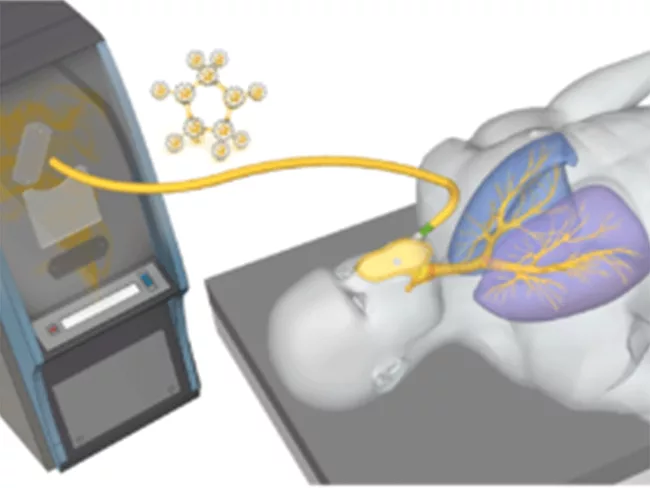
After receiving a U.S. FDA complete response letter nearly two years ago, Cyclopharm Ltd. said the agency has accepted its response and reset the clock for the NDA review of its Technegas combination product for pulmonary embolisms, with a new PDUFA date set for Sept. 29.
After receiving a U.S. FDA complete response letter nearly two years ago, Cyclopharm Ltd. said the agency has accepted its response and reset the clock for the NDA review of its Technegas combination product for pulmonary embolisms, with a new PDUFA date set for Sept. 29.
After receiving a U.S. FDA complete response letter nearly two years ago, Cyclopharm Ltd. said the agency has accepted its response and reset the clock for the NDA review of its Technegas combination product for pulmonary embolisms, with a new PDUFA date set for Sept. 29.
Manufacturing deficiencies stand in the way of two BLAs as complete response letters (CRLs) were issued to Eli Lilly and Co. and to Alvotech Holdings SA. The U.S. FDA issued the CRL to Lilly regarding the BLA for mirikizumab, a humanized IgG4 monoclonal antibody to treat ulcerative colitis, specifically citing manufacturing concerns. There’s a similar problem with Alvotech’s biosimilar candidate for Abbvie Inc.’s Humira (adalimumab). The FDA issued a CRL for AVT-02’s BLA, citing problems needing resolution at its Reykjavik, Iceland, manufacturing facility before it could approve the application.
Incyte Corp.’s bid for a once-daily vs. twice-daily version of the Janus kinase inhibitor Jakafi (ruxolitinib) was foiled, at least temporarily, by a complete response letter (CRL) from the U.S. FDA.
Eli Lilly and Co.’s complete response letter (CRL) from the U.S. FDA relating to accelerated approval of Alzheimer’s disease (AD) candidate donanemab set off a round of speculation regarding not only what the move might mean for the pharma giant but also for others in the embattled therapeutic space and beyond. The answer, if you believe analysts: not much.
Following the tone set in an October U.S. FDA Oncologic Drugs Advisory Committee meeting, the agency has issued a complete response letter (CRL) to Y-mabs Therapeutics Inc.’s BLA for Omblastys (131I-omburtamab) to treat central nervous system/leptomeningeal metastasis arising from neuroblastoma.