Dana-Farber Cancer Institute Inc. has divulged proteolysis targeting chimeras (PROTACs) comprising a cereblon (CRBN) binding moiety covalently linked to a histone-lysine N-methyltransferase, H3 lysine-79 specific (DOT1L) targeting moiety via linker reported to be useful for the treatment of cancer.
Beijing Tide Pharmaceutical Co. Ltd. has prepared proteolysis-targeting chimera (PROTAC) compounds comprising an ubiquitin ligase binding moiety bound to a protein phosphatase non-receptor type 11 (PTPN11; PTP-2C; SHP-2) targeting moiety through a linker.
Cullgen (Shanghai) Inc. has patented proteolysis targeting chimera (PROTAC) compounds comprising a DDB1 binding moiety covalently bonded to a target protein binding moiety through a linker. They are reported to be useful for the treatment of cancer.
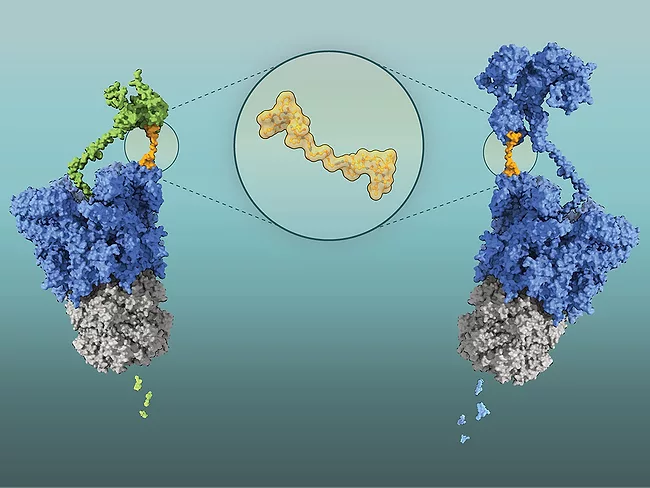
One way to prevent the effect of a molecule is to use the cell’s own machinery to break it down. This is what the PROTAC technology does, an acronym for proteolysis targeting chimera, or BacPROTAC, when applied to bacteria. A study led by Austrian and German scientists has demonstrated the effectiveness of this technique in eliminating the tuberculosis pathogen Mycobacterium tuberculosis (Mtb). The finding opens the door to the BacPROTAC strategy as an alternative to the development of drugs against this microorganism.
Halda Therapeutics Opco Inc. has divulged proteolysis-targeting chimeric (PROTAC) compounds comprising an E3 ubiquitin ligase binding moiety covalently bonded to a protein targeting moiety via linker; they are reported to be useful for the treatment of cancer.
Research at Boehringer Ingelheim Pharma GmbH & Co. KG has led to the development of proteolysis targeting chimeras (PROTACs) comprising a Von Hippel-Lindau E3 ubiquitin ligase (VHL)-binding moiety covalently linked to probable global transcription activator SNF2L2 (SMARCA2; BAF190B; SNF2-α) and/or transcription activator BRG1 (SMARCA4; BAF190A; SNF2-β) targeting moiety through a linker.
Researchers from Arvinas Inc. and affiliated organizations presented the discovery and preclinical evaluation of ARV-766, a novel androgen receptor (AR) degrading proteolysis targeting chimera (PROTAC), being developed for the treatment of metastatic castration-resistant prostate cancer (mCRPC).
Researchers from the University of Arizona presented the discovery of first-in-class dual-specificity tyrosine phosphorylation-regulated kinase 1A/B (DYRK1A/B) proteolysis targeting chimeras (PROTACs) as potential Alzheimer’s disease (AD) therapeutic candidates.