It’s difficult to fathom that the health of half the world’s population is underserved. But it’s a hard truth. There are many conditions that disproportionately impact women. Other conditions and diseases affect women in different ways than men. Decades of research excluding women from clinical trials and investment decisions in male-dominated board rooms have ignored these facts. Though an increasing number of women are now managing investments and driving the research, it’s all still woefully behind. In BioWorld’s new report, Healing the health divide, we’ve highlighted the disparities.
The E4 variant of the APO gene, the R47H variant of the TREM2 gene, and female sex are three of the strongest risk factors for the development of Alzheimer’s disease (AD). By combining all three of them in a mouse model of tauopathy, researchers at Weill Cornell Medical School have identified microglial inflammation and senescence as processes that occurred more strongly in female mice as tauopathy developed.
Blood vessels supplying adipose tissue in females and males differed in their biological characteristics and gene expression programs, researchers at York University in Toronto, Canada, have demonstrated. The findings, which will appear in the Jan. 20, 2023, print issue of Iscience after earlier publication online, give new insights into sex differences in metabolic health.
Fat tissue can be detrimental to health, but the relationship between fat, BMI and health is increasingly acknowledged as being highly complex. One factor that affects the relationship between fat and health is how well adipose tissue is vascularized. Any new tissue that forms in the body needs to be vascularized to ensure its blood supply, and fat is no exception.
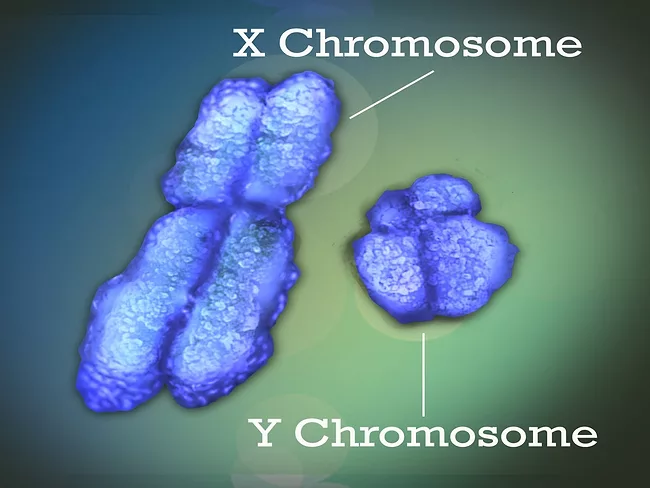
Israeli researchers have created cell lines, using cells donated by an individual with Klinefelter syndrome, that had different combinations of sex chromosomes but were otherwise isogenic. As reported in Stem Cell Reports on Nov. 24, 2022, lead investigator Benjamin Reubinoff, a clinician and professor in obstetrics and gynecology at Hadassah Hebrew University in Jerusalem, and team used cells donated from a mosaic Klinefelter syndrome patient to create the cell-based model. Patients with Klinefelter syndrome appear male, but have an extra X chromosome.
Disrupted meiosis, the cell division process that leads to the production of reproductive cells in sexually reproducing organisms, led to a decline in overall health by triggering an accelerating aging signature in the roundworm Caenorhabditis elegans.
The work is “the first direct evidence that manipulating the health of reproductive cells leads to premature aging and a decline in healthspan,” senior author Arjumand Ghazi, an associate professor of pediatrics, developmental biology, and cell biology and physiology at the University of Pittsburgh and the University of Pittsburgh Medical Center (UPMC) Children’s Hospital, said in a press release.