Neurocrine Biosciences Inc. has discovered new peptides acting as corticotropin-releasing factor CRF2 receptor agonists potentially useful for the treatment of obesity.
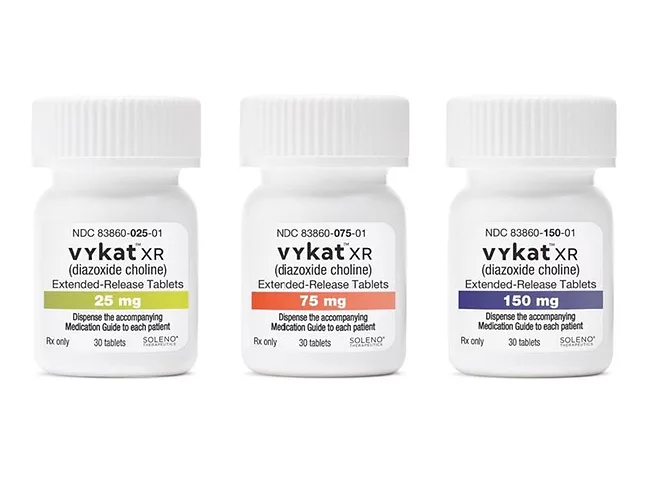
A proposal to buy out Soleno Therapeutics Inc. didn’t wait for European approval of Vykat XR (diazoxide choline) to treat hyperphagia in Prader-Willi syndrome, as Neurocrine Biosciences Inc. is putting on the table $53 per share in cash, which equates to an equity value of $2.9 billion.
The BioWorld Neurological Diseases Index (BNDI) finished 2025 up 6.33%, continuing the gains seen through November (closing up 2.64%), after reaching a low in July when it was down 22.48%. By comparison, the Nasdaq Biotechnology Index (NBI) ended the year up 32.4%, while the Dow Jones Industrial Average (DJIA) rose 12.97%. In the first two months of 2026, the BNDI slipped 1.24%, compared with gains of 5.85% for the NBI and 1.9% for the DJIA.
Neurocrine Biosciences Inc. has disclosed chemically modified polypeptides acting as gastric inhibitory polypeptide receptor (GIPR) and/or glucagon receptor (GCGR) and/or glucagon-like peptide 1 receptor (GLP-1R) agonists reported to be useful for the treatment of obesity.
Transthera Sciences Inc. is out-licensing one of its preclinical NLRP3 inhibitors to Neurocrine Biosciences Inc. under a collaboration agreement worth $881.5 million. Under deal terms, Nanjing, China-based Transthera will receive an undisclosed up-front payment and is eligible to receive research and development and sales-based milestone payments up to $881.5 million.
Transthera Sciences Inc. is out-licensing one of its preclinical NLRP3 inhibitors to Neurocrine Biosciences Inc. under a collaboration agreement worth $881.5 million. Under deal terms, Nanjing, China-based Transthera will receive an undisclosed up-front payment and is eligible to receive research and development and sales-based milestone payments up to $881.5 million.
Neurocrine Biosciences Inc. has disclosed vesicular monoamine transporter 2 (VMAT2) inhibitors reported to be useful for the treatment of neurological and psychiatric disorders, among others.
After Recognify Life Sciences Inc.’s phase IIb failure in treating the cognitive impairment in those with schizophrenia, the indication is no closer to a U.S. FDA approved therapy. The placebo-controlled study of inidascamine missed its primary endpoint to improve cognition, joining a list of companies that have tried and failed to find a successful treatment.
Neurocrine Biosciences Inc. has divulged cyclic peptides acting as corticotropin-releasing factor 1 and 2 (CRF1 and CRF2) antagonists reported to be useful for the treatment of congenital adrenal hyperplasia, cancer, osteoporosis, myopathy, hyperglycemia, Cushing syndrome, peptic ulcers and hypertension, among others.
While Spruce Biosciences Inc.’s tildacerfont missed its phase II primary endpoint in classic congenital adrenal hyperplasia (CAH) last March, the U.S. FDA approved Crenessity (crinecerfont) from Neurocrine Biosciences Inc. for treating pediatric and adult CAH patients. The nod could lead the drug to become a blockbuster, analysts said.