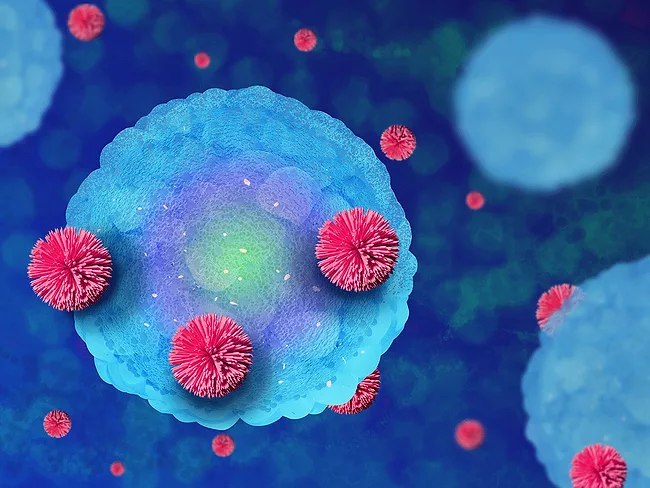
LONDON – “I really believe we can start using the word cure,” said the pioneer of chimeric antigen receptor T-cell (CAR T) therapy Carl June, as he revealed two leukemia patients he treated in a phase I trial have now been in remission for 10 years. Both patients with chronic lymphocytic leukemia achieved complete remission shortly after treatment in 2010. The genetic modification has remained detectable in their CAR T cells for more than 10 years of follow-up, June said, describing details of the case studies published in Nature Feb. 2.
Several pharma companies think that targeting a rogue protein known as alpha-synuclein could be the key to halting or reversing neurodegeneration in Parkinson’s disease – but has the industry learned from a string of failures in Alzheimer’s? In the space of a few weeks, Novartis AG and Sanofi AS have signed major deals for molecules targeting misfolded alpha-synuclein, the rogue protein thought to be the root cause of Parkinson’s disease.
A split decision from the U.S. Court of Appeals for the Federal Circuit could give Novartis AG’s blockbuster multiple sclerosis drug, Gilenya (fingolimod), a little more breathing room from unlicensed generics.
Novartis AG’s FDA go-ahead for Leqvio (inclisiran), the first and only small interfering RNA therapy to lower LDL-C, “should come as a relief, given fears that the pandemic could again limit FDA's ability to conduct manufacturing-site inspections,” Jefferies analyst Peter Welford said. PCSK9-targeting Leqvio’s Dec. 22 approval, which came slightly ahead of the Jan. 1, 2022, PDUFA date, landed after a complete response letter about a year ago, citing unresolved facility inspection-related conditions. The drug is dosed twice per year, unlike competitors in the space.
DUBLIN – Novartis AG is deepening its commitment to ocular gene therapy by picking up Gyroscope Therapeutics Ltd. for $800 million up front and up to $700 million more in potential milestone payments.
PERTH, Australia – It’s been a year that Mesoblast Ltd. might like to forget. The company’s stock dropped 17% Dec. 15 on the news that Novartis AG will terminate its licensing agreement with Mesoblast for remestemcel-L.
Novartis AG has forged even stronger links with Beigene Ltd., taking an option on the latter’s late-stage TIGIT inhibitor cancer immunotherapy ociperlimab in a deal worth up to $1 billion.
Novartis AG has forged even stronger links with Beigene Ltd., taking an option on the latter’s late-stage TIGIT inhibitor cancer immunotherapy ociperlimab in a deal worth up to $1 billion. Basel, Switzerland-based Novartis will pay the Beijing-based pharma $300 million up front in the option, collaboration and license agreement plus up to $700 million if it exercises its option before late 2023.
PERTH, Australia – It’s been a year that Mesoblast Ltd. might like to forget. The company’s stock dropped 17% on the news that Novartis AG will terminate its licensing agreement with Mesoblast for remestemcel-L. The decision puts an end to an exclusive global licensing deal Mesoblast inked with Novartis in November 2020 for the development, manufacture and commercialization of the mesenchymal stromal cell product, with an initial focus on acute respiratory distress syndrome, including that associated with COVID-19.
Novartis AG, keen to expand its central nervous system franchise as generics chase down crown jewel Gilenya (fingolimod), has secured rights from UCB SA to co-develop and commercialize two potential Parkinson's disease therapies for $150 million up front and milestone payments approaching $1.5 billion.