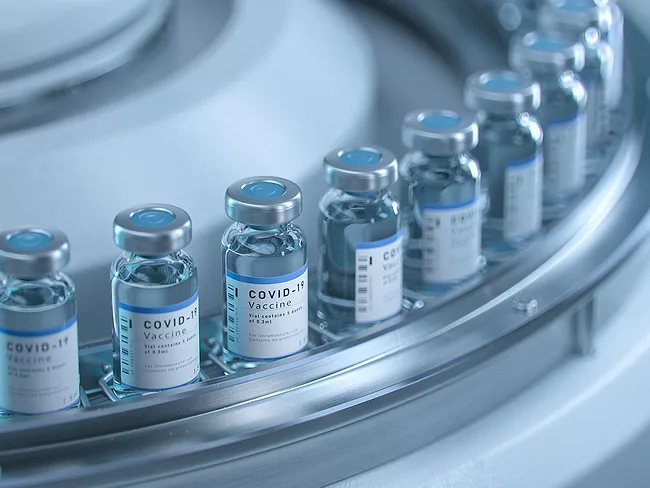
Landing on the right COVID-19 vaccine formulation for the coming season is becoming more complicated against a backdrop of low vaccination rates, young children with little to no immunization, declining surveillance data and a new SARS-COV-2 lineage slowly emerging.
What would normally be a routine meeting of the FDA’s Vaccines and Related Biological Products Advisory Committee May 28 may be more carefully watched given the overall turmoil surrounding vaccines in the U.S. The only task before the adcom is to recommend the COVID-19 vaccine formula for the upcoming season. That conversation will include looking at the effectiveness of the four FDA-approved vaccines currently in use in the U.S.
Pfizer Inc. has reported new triggering receptor expressed on myeloid cells 2 (TREM2) agonists potentially useful for the treatment of neurodegeneration.
Pfizer Inc. has synthesized substituted fused heteroaryl lactam compounds acting as dual calcitonin (CALCR; CT-R)/amylin receptor agonists potentially useful for the treatment of obesity and type 2 diabetes.
Rigel Pharmaceuticals Inc. CEO Raul Rodriguez said breast cancer therapy Veppanu (vepdegestrant) could become his firm’s “largest product with the current label,” and other opportunities with the drug are lined up behind, albeit “still a bit early.”
Infectious disease-focused biopharma stocks, tracked on the BioWorld Infectious Disease Index (BIDI), saw their collective shares roughly follow the path of broader markets like the Nasdaq Biotechnology Index (NBI) and the Dow Jones Industrial Average (DJIA) in early 2026. The BIDI ended April up 3.8%, followed by the DJIA with a 3.31% gain and 2.73% for the NBI, following a similar pattern to 2025.
A month ahead of its June 5 PDUFA date, Arvinas Inc.’s vepdegestrant gained U.S. FDA approval for use in a specific type of advanced or metastatic breast cancer, becoming the first proteolysis targeting chimera, or PROTAC, drug to reach the market.
Pfizer Inc. has discovered new gastric inhibitory polypeptide receptor (GIPR) antagonists potentially useful for the treatment of type 2 diabetes and obesity.
Pfizer Inc. has patented new gastric inhibitory polypeptide receptor (GIPR) antagonists reported to be potentially useful for the treatment of type 2 diabetes and obesity.
An advantage of antibody-drug conjugates (ADCs) is that they allow targeted delivery of cytotoxic agents into tumors, thus improving the therapeutic index. Pfizer Inc. has developed a new ADC, PF-08046033, that contains auristatin S (AurS) as the cytotoxic payload and targets transmembrane glycoprotein NMB (GPNMB).