The first bispecific antibody to win regulatory approval is about to make a comeback 10 years after being taken off the market in Europe for commercial reasons. Catumaxomab, then called Removab, and now reborn with the brand name Korjuny, received a positive opinion for the treatment of malignant ascites from the EMA’s Committee for Medicinal Products for Human Use (CHMP,) at its monthly meeting Oct. 14 to 17.
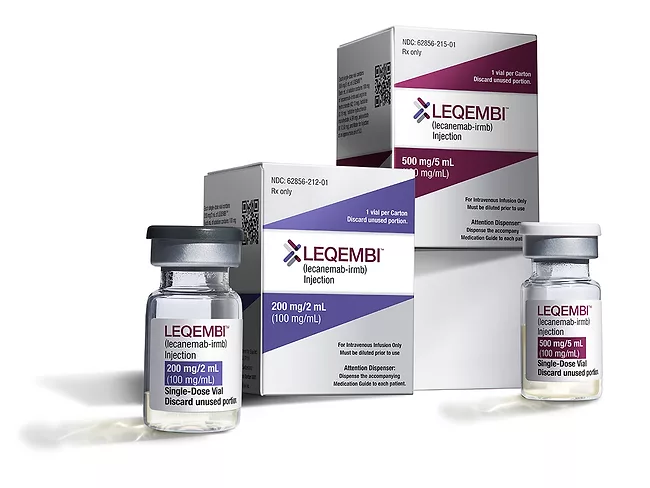
The EMA’s Committee for Medicinal Products for Human Use (CHMP) recommended approval of 14 drugs and the extension of the label of 11 others at its July meeting, but, inevitably, it was the decision to turn down the Alzheimer’s disease therapy Leqembi (lecanemab) that stirred the greatest reaction.
Two drugs were pushed back by the EMA last week, with a recommendation that Ocaliva, currently the only second line standard of care for treating primary biliary cholangitis, be withdrawn from the market, and a refusal to grant conditional approval for masitinib in the treatment of amyotrophic lateral sclerosis.
A nearly two-year-old partial clinical hold has been lifted by the U.S. FDA on PTC Therapeutics Inc.’s pivotal phase II study in Huntington’s disease. The agency had paused enrollment in October 2022, saying it wanted more data on PTC-518, an orally bioavailable small-molecule splicing modifier, before enrollment could continue.
The EMA has been sent back to the drawing board to re-evaluate PTC Therapeutics Inc.’s Duchenne muscular dystrophy therapy Translarna (ataluren), after failing to get the usual rubber stamp following its recommendation in January that the drug’s conditional approval be withdrawn.
After almost 10 years on the market, the EMA is to withdraw its conditional approval of the Duchenne muscular dystrophy treatment Translarna (ataluren), after concluding there is still not enough evidence of its effectiveness.
“This is a tough business. It’s never a straight line from start to success.” Those words, from Exelixis Inc. CEO Michael Morrissey, during a presentation at the J.P. Morgan Healthcare Conference (JPM), could easily sum up any aspect of the biopharma industry. But with more biopharma firms than ever having reached commercial status, along with the introduction of new therapeutic modalities into the health care market, many are finding the toughest part comes after regulatory approval, whether it’s navigating a competitive landscape, getting payers and physicians on board, or satisfying regulators’ stringent postmarketing requirements. As industry players and observers head home after a busy week in San Francisco, BioWorld offers a brief glimpse at a few firms taking on those post-approval challenges in 2024.
Royalty monetization is a financing tactic that is becoming increasingly popular during challenging times, and PTC Therapeutics Inc. is the latest firm to leverage a marketed drug to pay off debt and fuel its development pipeline. The South Plainfield, N.J.-based company agreed to sell up to $1.5 billion of its Evrysdi (risdiplam) royalty stream to Royalty Pharma plc, of New York. Evrysdi is a survival motor neuron 2 RNA splicing modifier approved by the U.S. FDA in 2020 to treat spinal muscular atrophy.
“We’re going to battle,” PTC Therapeutics Inc. CEO Matthew Klein said, responding to a surprise negative opinion from the EMA’s Committee for Medicinal Products for Human Use on converting the conditional marketing authorization to full status for Translarna (ataluren) in the treatment of nonsense mutation Duchenne muscular dystrophy. The opinion applies to the renewal of the existing conditional authorization, too.