DUBLIN – A meaty licensing deal with Regeneron Pharmaceuticals Inc. is as good a time as any to unveil a new corporate identity. Nykode Therapeutics AS, the Norwegian immunotherapy firm formerly known as Vaccibody, is banking $30 million up front, another $20 million as an equity investment, and could earn up to $875 million more in development and commercial milestones across a multiproduct deal to develop vaccines for cancer and infectious disease.
New positive phase III study results for Regeneron Pharmaceuticals Inc.’s COVID-19 monoclonal antibody cocktail show a single dose reduced the risk of contracting the virus by 81.6% during a two- to eight-month follow-up period. The strong data go along with Pfizer Inc.’s recent positive results for its oral antiviral, Paxlovid, hinting that COVID-19 therapeutics could begin cutting into powerful mRNA vaccine margins from Pfizer Inc.-Biontech SE and Moderna Inc.
New data on the COVID-19 antibody therapy Ronapreve (casirivimab + imdevimab), already used to treat non-hospitalized patients in multiple countries, could potentially support expanding its use to certain recently hospitalized patients with the disease.
While much of the global pandemic response has focused on vaccines, the World Health Organization is now calling on drug manufacturers to ramp up their supply and donations of monoclonal antibodies used to treat COVID-19 infections.
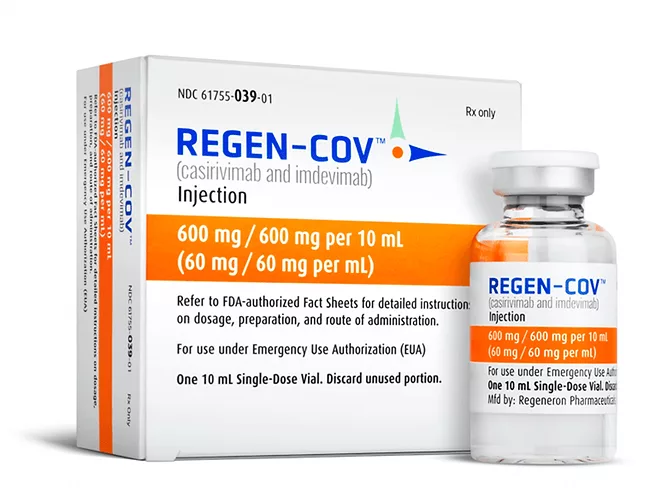
With the U.S. logging more than 4 million new COVID-19 cases in the past few weeks, federal purchasing of antibody cocktails from Regeneron Pharmaceuticals Inc. and Eli Lilly and Co. is continuing to grow. The government has placed orders for $2.94 billion worth of Regeneron's REGEN-COV (casirivimab and imdevimab) and about $330 million of Lilly's etesevimab to complement doses of bamlanivimab it previously purchased. Both antibody combinations, approved under FDA emergency use authorizations (EUAs), have been shown to reduce risk of hospitalization or death from COVID-19.
As many lower and middle-income countries continue to scramble for COVID-19 vaccine doses, which are largely being manufactured in Europe and the U.S., their own regulatory rules may be getting in the way in some instances.
Astrazeneca plc, en route to potentially delivering a new protection against COVID-19 for people inadequately protected by or unable to be vaccinated, has cleared a crucial hurdle with its long-acting combination therapy, AZD-7442, which met the goals of a phase III pre-exposure prophylaxis trial. The U.K.-based pharma’s readout arrived just as Regeneron Pharmaceuticals Inc. announced the MHRA’s conditional marketing authorization for its Roche Holding AG-partnered COVID-19 antibody therapy Ronapreve (casirivimab + imdevimab), also known as REGEN-COV.
Japan’s Ministry of Health, Labour and Welfare approved the Regen-Cov (casirivimab/imdevimab, also known as Ronapreve) antibody cocktail for the treatment of patients with mild to moderate COVID-19 via intravenous infusion.
As a first step in developing a portfolio of COVID-19 therapies, the European Commission identified five promising candidates June 29, including four monoclonal antibodies under rolling review at the EMA and an immunosuppressant that could have its marketing authorization extended to include the treatment of COVID-19 infections.
CEO John Leonard said Intellia Therapeutics Inc. plans “to share information on a cohort-by-cohort basis, so we get a consistent readout” and, as the year goes on, longer-term follow-up findings will emerge from the phase I trial with the company’s lead in vivo genome editing candidate, NTLA-2001.