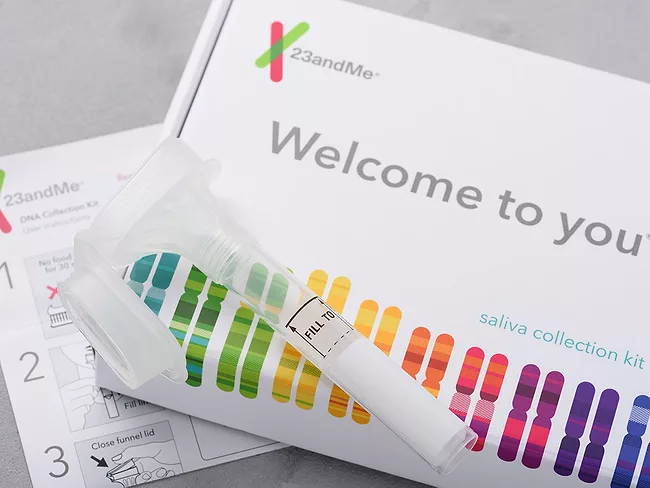
Regeneron Pharmaceuticals Inc. was the successful bidder for 23andme Holding Co.’s personal genome service, total health and research services business lines, including its biobank and associated assets, in the bankruptcy auction to sell 23andme's assets.
First quarter 2025 results presentations were the first chance analysts have had to quiz pharma companies in public about their exposure to the threat of U.S. import tariffs and what action they are taking to mitigate the risks.
First quarter 2025 results presentations were the first chance analysts have had to quiz pharma companies in public about their exposure to the threat of U.S. import tariffs and what action they are taking to mitigate the risks. BioWorld reporters have listened in to the analyst meetings and filleted out responses to the tariff question by CEOs and senior executives, to get an overview of how the sector as a whole is responding. One thing is very clear: While pharmaceuticals are for now exempt from tariffs, the industry has been bracing for their imposition whilst at the same time lobbying strongly against them, on the grounds that drug shortages could result.
Another complete response letter from the U.S. FDA for Regeneron Pharmaceuticals Inc.’s age-related macular degeneration (AMD) therapy Eylea (aflibercept) – along with disappointing sales of the VEGF inhibitor – dented shares (NASDAQ:REGN) by $41.95. They closed April 29 at $568.91, having traded as low as $542.44 during the day.
The U.S. FDA issued a complete response letter in October 2023 for Dupixent (dupilumab) in treating chronic hives but has now approved the monoclonal antibody for the indication. The approval makes Dupixent the first targeted biologic the agency has approved in the past 11 years for chronic spontaneous urticaria.
In Regeneron Pharmaceuticals Inc.’s phase I/II Chord study of 12 children with genetic hearing loss, 10 out of 11 have shown improvements after being treated with a gene therapy. “What is really remarkable about this type of therapeutic approach is that the first people who are going to see the impact are not actually the physicians – it’s the families,” Jonathon Whitton, vice president and Regeneron’s auditory global program head, told BioWorld.
Novartis AG is paying nearly $1 billion up front to buy privately held Anthos Therapeutics Inc. in a deal that eventually could top out around $3.1 billion. Novartis, coming back to where it started as it and Blackstone Life Sciences founded Anthos in 2019, is entering a crowded space.
4D Molecular Therapeutics Inc.’s gene therapy, 4D-150, in wet age-related macular degeneration (wet AMD) produced positive phase IIb data as the company preps two phase III studies set to begin this year.
It’s taken nearly a decade for the U.S. FDA to go from zero to 60 in approving biosimilars. Currently, 63 biosimilars have been approved in the U.S., thanks to 18 new approvals in 2024 that stretched the number of biologics referenced by biosimilars from 14 to 17. That’s an all-time record, CDER Director Patrizia Cavazzoni said, as she released the drug center’s annual approval report for 2024.
The BioWorld Biopharmaceutical Index (BBI) closed November with a modest 3.58% gain for the year, a sharp decline from its 16.92% rise in September and peak of 25.19% in August. The BBI has now fallen behind the Nasdaq Biotechnology Index, which posted a 6.27% year-to-date gain, and the Dow Jones Industrial Average, up 19.16% at the end of the month.