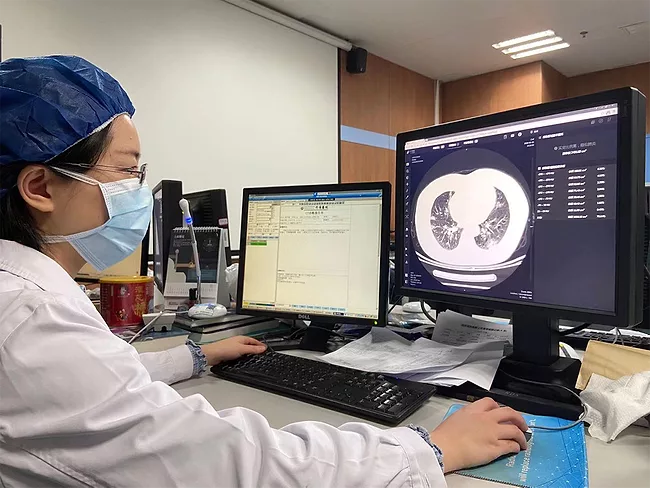
Infervision Technology Co. Ltd. has received the green light from the U.S. FDA for its Inferread Lung CT.AI product. The artificial intelligence- and deep learning-based technology automatically performs lung segmentation and identifies and labels different types of lung nodules. According to the 510(k) notification, Inferread Lung CT.AI “is comprised of computer assisted reading tools designed to aid the radiologist in the detection of pulmonary nodules during the review of CT examinations of the chest on an asymptomatic population.”
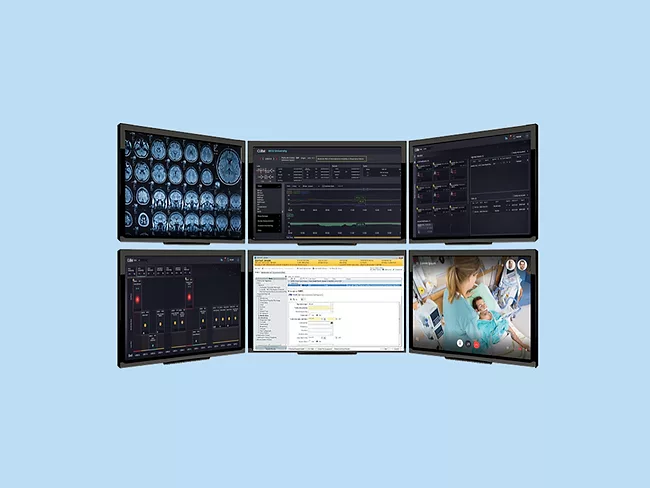
Clew Medical Ltd., of Netanya, Israel, has secured an emergency use authorization (EUA) from the U.S. FDA for its ClewICU system for use with COVID-19 patients in intensive care units (ICUs). The screening system is a standalone software as a medical device product that uses vital signs, laboratory data, medications and other information to assess the likelihood a patient has been infected with SARS-CoV-2, the virus that causes COVID-19.
TORONTO – Seven years after setting up shop in downtown Toronto, high resolution, surgical imaging med-tech company Perimeter Medical Imaging Inc. (PMI) is still wrestling with a statistical heartbreaker: 1 in 4 patients told to return for a second surgery to remove cancerous breast tissue after the first surgery failed to get it all. Now PMI has said it can cut that number down dramatically thanks to a $7.44 million investment from the Austin, Texas-based Cancer Prevention and Research Institute of Texas (CPRIT) to identify wayward breast cancer cells using artificial intelligence technology.
Deep Lens Inc. has integrated molecular data parsing and management technology into its Viper clinical trial screening and enrollment platform, enabling automated matching of patients with eligible genetic profiles to clinical trials. The Columbus, Ohio-based company licensed the proprietary technology from the University of Miami.
Paris-based health care startup Cardiologs Technologies SAS has launched a clinical study to assess the use of its artificial intelligence (AI) platform to remotely monitor cardiac safety in COVID-19 patients being treated with the malaria drug hydroxychloroquine. The study could help to detect and prevent serious cardiac effects of the drug.
AI-based, digital pathology startup Proscia Inc. has partnered with the University of California at San Francisco (UCSF) to advance the practice of pathology via artificial intelligence (AI). The pair will start with prostate cancer and then plan to move on to validate approaches in several additional pathology subspecialties.
BEIJING – More and more companies and researchers in China are rolling out artificial intelligence (AI)-based systems that can process hundreds of computed tomography (CT) images in seconds to speed up diagnosis of COVID-19 and assist in its containment.
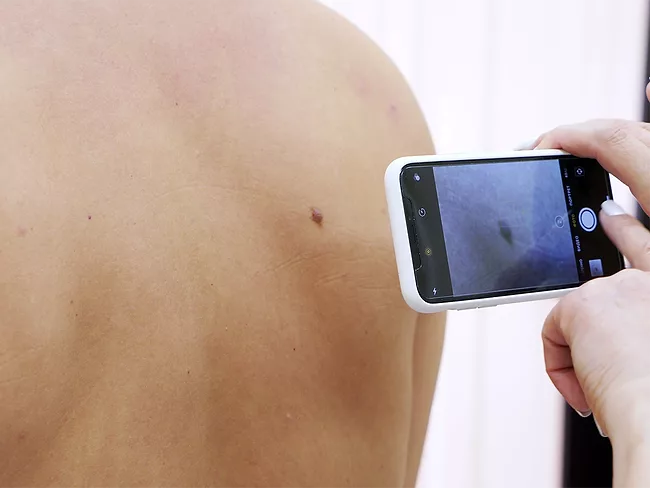
LONDON – Consumer smartphone apps that use image processing algorithms to assess and monitor potentially cancerous skin lesions have not been properly tested in clinical trials and cannot be relied on to produce accurate results, according to a systematic review of published studies.
ANAHEIM, Calif. – Is artificial intelligence (AI) ready for prime time in health care? What’s hype and what’s real? That’s the question that was posed to an expert panel at MD&M West.
PARIS – EY SAS has published the results of the first edition of a barometer dedicated to the role of artificial intelligence (AI) in French public hospitals. The health care sector, which is undergoing wholesale change in France, is suffering tight economic constraints and faces ever-increasing expectations from patients. “The development of [AI] in France is a priority. It's a matter of gauging it,” Loïc Chabanier, an EY partner responsible for health care, told BioWorld.
 RSS
RSS