What does the landscape look like in terms of funding for digital health? Geoffrey Starr, a partner at Cooley LLP, dove into this question during the Digital Health Summit, part of CES 2020. He acknowledged that 2019 saw a slight dip in funding compared with the record-breaking previous year. With that said, it was the second largest year ever for digital health care financings, with more than one-third of all health care venture financings involving digital health technologies.
Artificial intelligence (AI) is better than humans at pattern recognition within images and other densely complex datasets. That fact has long been expected to translate into meaningful change in the way we interpret health care data, but beyond a few early exceptions that is not yet the case. Now, the research is starting to amass that demonstrates the real potential for machine learning to significantly improve diagnostics and treatment.
Caresyntax GmbH, a Berlin-based provider of surgical automation, analytics and AI software technologies, picked up $45.6 million in venture funding. The funds will be used to accelerate U.S. and global expansion and support continued development and deployment of Caresyntax products. Participating in the financing were Whiz Partners, a Takeda-back drug discovery gateway investment limited partnership, Plug and Play Tech Center, Barco Healthcare, Mitsubishi Corp., Relyens, IPF Partners and Caresyntax founders Dennis Kogan and Bjoern von Siemens.
HONG KONG – SK Holdings Co. Ltd. invested ₩10 billion (US$8.6 million) in Standigm Inc., an artificial intelligence (AI)-powered biotech company based in Seoul, Korea. It is the second big investment Standigm has attracted this year after a ₩13 billion series B round in March.
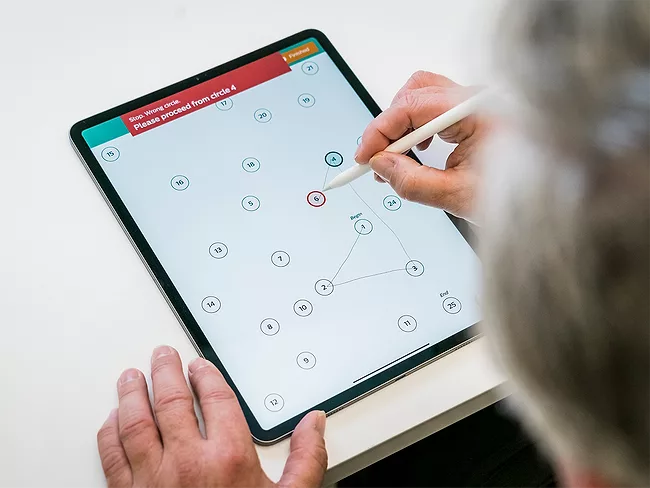
A neuropsychologist consult is typically the first step for a neurologist in aiding in the diagnosis and monitoring of neurological conditions. But timely appointments for an assessment by these specialists can be difficult to obtain, even under the best of circumstances. To better enable neurologists to assess which patients are most in need of a consultation with a neuropsychologist, Royal Philips NV has launched an artificial intelligence (AI)-based cognitive assessment tool in the U.S. Known as Philips Intellispace Cognition, the digital, cloud-based assessment tool takes established neuropsychological tests and enables their administration by a medical assistant via a tablet in an office setting.
HONG KONG – South Korean AI-based biotech Azoth Bio Inc., of Seongnam, Gyeonggi-do, and biopharmaceutical venture Wellmarker Bio Co. Ltd., based in Seoul, have signed a memorandum of understanding for cancer drug R&D and commercialization. Under the agreement, the two entities will use Azoth's AI-powered platform to develop Wellmarker's cancer treatment candidates.
Deciding which patients should go into the intensive care unit (ICU) after surgery is a difficult call and typically made entirely at the surgeon's discretion. The result is that surgeons typically err on the side of caution by putting more post-operative patients in the ICU than necessary. To aid in better ICU decision-making, physicians at New York University Langone Hospital System (NYU Langone) developed a machine learning algorithm that combs through a patient's electronic medical record to identify relevant factors to determine if they needed the ICU after surgery.
Radiologists review thousands of images a day. The hope is that artificial intelligence (AI) applications will become useful soon to verify diagnoses, prioritize queued images and even to offer a level of detection and measurement that aren't feasible for humans. One of the latest efforts on this front is by researchers at the University of California at San Francisco (UCSF) and the University of California at Berkeley.
CLEVELAND – What are some of the biggest challenges related using to artificial intelligence (AI) in health care? A panel of experts tackled that question during a session Tuesday during the 2019 Medical Innovations Summit, while also discussing what their organizations have done in this space to advance patient care.
Palo Alto, Calif.-based startup Doc.ai is training its sights on the $9.5 billion global epilepsy market, with the aim of using artificial intelligence to help patients find the best medication to control their seizures. To that end, the company is teaming up with the Stanford University School of Medicine and the Stanford Epilepsy Center on a digital health trial to develop a predictive treatment model that will identify the right treatment at the right time for individuals living with epilepsy.

 RSS
RSS