BioWorld. Link to homepage.

Clarivate
  • BioWorld
  • BioWorld MedTech
  • BioWorld Asia
  • BioWorld Science
  • Data Snapshots
    • BioWorld
    • BioWorld MedTech
    • Infographics: Dynamic digital data analysis
    • Index insights
    • NME Digest
  • Special reports
    • Infographics: Dynamic digital data analysis
    • Trump administration impacts
    • Under threat: mRNA vaccine research
    • BioWorld at 35
    • Biopharma M&A scorecard
    • Bioworld 2025 review
    • BioWorld MedTech 2025 review
    • BioWorld Science 2025 review
    • Women's health
    • China's GLP-1 landscape
    • PFA re-energizes afib market
    • China CAR T
    • Alzheimer's disease
    • Coronavirus
    • More reports can be found here

BioWorld. Link to homepage.

  • Sign In
  • Sign Out
  • My Account
Subscribe
BioWorld - Thursday, January 15, 2026
Home » Topics » Cell therapy » Transplantation

Transplantation
Transplantation RSS Feed RSS

HIV-1 virus particle
HIV/AIDS

Düsseldorf patient cured of HIV after stem cell transplant

Feb. 20, 2023
By Mar de Miguel
Fifteen years ago, at the 2008 Conference on Retroviruses and Opportunistic Infections (CROI), researchers announced that they had cured a patient – Timothy Ray Brown, initially known only as the Berlin Patient to preserve his privacy – of HIV through a hematopoietic stem cell transplant. Now, as researchers are gathered in Seattle for CROI 2023, reports of another cured patient were published Feb. 20, 2023, in Nature Medicine. Ten years after receiving a hematopoietic stem cell transplant, and 4 years after stopping antiretroviral treatment (ART), a 53-year-old patient may have been cured of HIV infection.
Read More
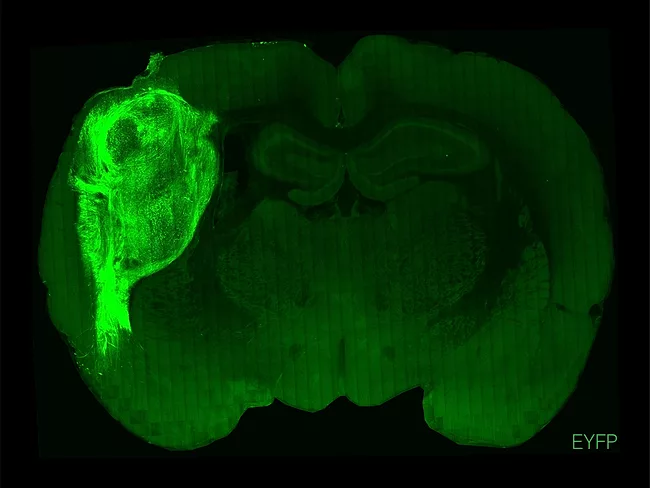
A transplanted human organoid in a section of the rat brain.
Neurology/Psychiatric

Human brain organoids mature after transplantation into rats

Oct. 14, 2022
By Mar de Miguel
Human brain organoids transplanted into rats could be used as an in vivo model for the study of neuropsychiatric diseases. Researchers at Stanford University managed to mature human organoid neurons in the somatosensory cortex of the animal's brain and incorporate them into its neural circuitry.The integration improved the morphological and physiological properties of the transplanted neurons. Compared to those of organoids in a Petri dish, human cells preserved their own identity, and they modified the rat's learned behavior through stimulation and reward experiments.
Read More
A transplanted human organoid in a section of the rat brain.
Neurology/Psychiatric

Human brain organoids mature after transplantation into rats

Oct. 13, 2022
By Mar de Miguel
Human brain organoids transplanted into rats could be used as an in vivo model for the study of neuropsychiatric diseases. Researchers at Stanford University managed to mature human organoid neurons in the somatosensory cortex of the animal's brain and incorporate them into its neural circuitry.The integration improved the morphological and physiological properties of the transplanted neurons. Compared to those of organoids in a Petri dish, human cells preserved their own identity, and they modified the rat's learned behavior through stimulation and reward experiments.
Read More
Previous 1 2 Next

Popular Stories

  • Today's news in brief

    BioWorld
    BioWorld briefs for Jan 15, 2025.
  • Today's news in brief

    BioWorld MedTech
    BioWorld MedTech briefs for Jan. 15, 2026.
  • 3D rendering of antibody drug conjugated with cytotoxic payload

    ADCs’ breakout 2025 and their still-unfinished potential

    BioWorld
    Over the course of the year, and continuing into the latest scientific meetings, an extraordinary breadth of new antibody-drug conjugate (ADC) designs was...
  • Lung cancer illustration

    LINC01116 has prognostic value in lung cancer, study shows

    BioWorld MedTech
    Long noncoding RNAs (lncRNAs) have emerged as potential markers of disease, since they associate with proteins that regulate gene expression, translation or...
  • SERPINB1 as potential biomarker for spinocerebellar ataxia type 2

    BioWorld Science
    Researchers from Goethe-Universität and collaborators investigated novel molecular biomarker candidates for spinocerebellar ataxia type 2, a progressive...
  • BioWorld
    • Today's news
    • Analysis and data insight
    • Clinical
    • Data Snapshots
    • Deals and M&A
    • Financings
    • Newco news
    • Opinion
    • Regulatory
    • Science
  • BioWorld MedTech
    • Today's news
    • Clinical
    • Data Snapshots
    • Deals and M&A
    • Financings
    • Newco news
    • Opinion
    • Regulatory
    • Science
  • BioWorld Asia
    • Today's news
    • Analysis and data insight
    • Australia
    • China
    • Clinical
    • Deals and M&A
    • Financings
    • Newco news
    • Regulatory
    • Science
  • BioWorld Science
    • Today's news
    • Biomarkers
    • Cancer
    • Conferences
    • Endocrine/Metabolic
    • Immune
    • Infection
    • Neurology/Psychiatric
    • NME Digest
    • Patents
  • More
    • About
    • Advertise with BioWorld
    • Archives
    • Article reprints and permissions
    • Contact us
    • Cookie policy
    • Copyright notice
    • Data methodology
    • Infographics: Dynamic digital data analysis
    • Index insights
    • Podcasts
    • Privacy policy
    • Share your news with BioWorld
    • Staff
    • Terms of use
    • Topic alerts
Follow Us

Copyright ©2026. All Rights Reserved. Design, CMS, Hosting & Web Development :: ePublishing