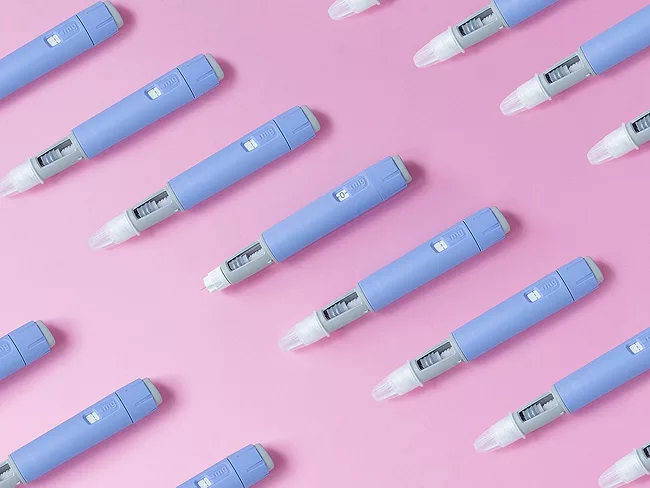
As Novo Nordisk A/S and Eli Lilly and Co. go head-to-head in the U.S. and Chinese glucagon-like peptide-1 receptor agonists (GLP-1RA) market for diabetes and obesity, Novo Nordisk is in innovator gear once more with leading studies of GLP-1s in Alzheimer’s disease.
Chinese pharmaceutical and biotech companies are leading development of glucagon-like peptide-1 receptor agonists as Novo Nordisk A/S and Eli Lilly and Co. edge closer to launching blockbuster therapies in China. At the heart of the GLP-1 boom is a nationwide obesity problem driven by a confluence of factors, including the rise of a modern, sedentary lifestyle, according to Clarivate. Despite the rising prevalence of obesity and type 2 diabetes, the gap in obesity therapeutics is “substantial and leaves a solid market opportunity for weight loss drugs,” Karan Verma, principal analyst of healthcare research & data analytics at Clarivate, said.
Immvira Group Co.’s oncolytic herpes simplex virus product, MVR-T3011, showed early efficacy via intravesical administration in patients with high-risk BCG-failure non-muscle invasive bladder cancer.
More than three months ago, investors first learned that ivonescimab, a PD-1/VEGF-targeting bispecific antibody from Summit Therapeutics and Akeso Pharmaceuticals Inc., bested Keytruda (pembrolizumab) in PD-L1-positive non-small-cell lung cancer (NSCLC). At the 2024 World Conference on Lung Cancer over the weekend, Summit rolled out detailed data from the phase III Harmoni-2 trial, which included a nearly doubling of progression-free survival for ivonescimab compared to Merck & Co. Inc.’s established blockbuster drug.
After initially reporting that Xanamem failed to meet the primary endpoint in cognitive attention in the phase IIa Xanacidd cognition and depression trial, Actinogen Medical Ltd. CEO Steven Gourlay said a new analysis shows clinically and statistically significant benefits in depression.
Yunovia Co. Ltd. gained clearance in South Korea to start a multiple ascending dose phase I study for ID-110521156 – a novel, orally available, small-molecule, glucagon-like peptide-1 (GLP-1) agonist.
All patients dosed in a phase IIa trial with Tryptamine Therapeutics Ltd.’s (Tryp) oral psilocybin (TRP-8802) trial reported an improvement in fibromyalgia pain severity, sleep, and pain interference.
Visen Pharmaceuticals Co. Ltd.’s palopegteriparatide met both primary and secondary endpoints in the phase III Pathway trial conducted in China in adults with chronic hypoparathyroidism, according to top-line data. In the 26-week randomized, double-blind, placebo-controlled Pathway trial, 77.6% of patients treated with palopegteriparatide achieved the primary multicomponent endpoint compared to 0% for placebo.
Neuren Pharmaceuticals Ltd.’s NNZ-2591 met the primary endpoints in a phase II trial in children with Angelman syndrome, with improvements seen in clinically important aspects of the disease, including communication, behavior, cognition and motor abilities, Neuren CEO Jon Pilcher said during an Aug. 9 conference call.
China’s National Medical Products Administration has cleared Luye Pharma Group Ltd.’s new schizophrenia candidate LY-03020 to enter phase I trials in China. Independently developed by Shanghai-based Luye, the new chemical entity is a dual agonist that targets both the trace amine-associated receptor 1 and the 5-HT2C receptor and is intended to treat schizophrenia and Alzheimer’s disease psychosis.
 RSS
RSS