A panel of leaders in women’s health at the 2022 edition of the J.P. Morgan Healthcare Conference addressed the challenges and benefits of digital health and new apps in enabling women to be the “chief medical officers” of their families’ health and to take the necessary steps to improve their own. The panel included moderator Lynne Chou O’Keefe, founder and managing partner of Define Ventures; Apple Inc.’s Vice President of Health Sumbul Ahmad Desai; Veronica Gillispie-Bell, assistant professor, Ochsner Health System; Found CEO Sarah Jones Simmer; Michelle Williams, dean of faculty at the Harvard T.H. Chan School of Public Health; and Tia Inc. CEO and co-founder Carolyn Witte.
Digital health innovation was front and center at this year’s Consumer Electronic Show (CES) in Las Vegas. The four-day event included a major product announcement from Abbott Laboratories and a keynote presentation delivered by CEO Robert Ford. This marked the first time a health care company has been invited to take the main stage.
The Verifying Accurate Leading-edge IVCT Development (VALID) Act seems poised for passage in 2022, a bit of welcome relief for those stuck in the regulatory twilight world of the lab-developed test (LDT). However, Carly McWilliams, director of regulatory policy for North America for Roche Inc., said recently at the recent Food and Drug Law Institute enforcement meeting that the VALID Act is likely to leave the question of a user fee schedule for a future Congress, given that the associated rulemaking, guidance development and compliance activities are likely to consume the better part of, if not the entirety of, the next five years.
Two studies presented at the 33rd Transcatheter Cardiovascular Therapeutics (TCT) conference directly compared Boston Scientific Corp.’s Watchman 2.5 and Watchman Flx to Abbott Laboratories’ Amplatzer Amulet device. Both showed Amulet had less than half as many leaks, but the clinical impact of the lower rate remained unclear.
Catheter-based delivery of replacement valves is established practice for patients with aortic regurgitation, but the mitral valve has only repair devices to address this condition. However, transcatheter mitral valve replacement (TMVR) devices by Dublin-based Medtronic plc., and triscupid valve replacement devices by Edwards Lifesciences Inc. of Irvine, Calif., made some noise at this year’s edition of Transcatheter Cardiovascular Therapeutics (TCT), suggesting that these patients might soon have a wider range of options.
It has long been known that patients recover more quickly from transcatheter aortic valve replacement (TAVR) than from open-heart surgery for valve replacement (SAVR) and results at two years looked good, too, with very similar outcomes. The question remained what happens in the longer term?
A new study has found that despite the risk, many patients are open to interventional procedures such as renal denervation (RDN) if it can lead to improved blood pressure. RDN is performed under local anesthetic and uses radio frequency ablation to burn the nerves in the renal arteries. The process causes a reduction in nerve activity, which decreases blood pressure.
Despite the morbidity associated with coronary artery bypass graft, this procedure has never been entirely displaced by percutaneous coronary intervention. The results from the latest in a series of studies does not seem to help the case for drug-eluting stents (DES) for patients with three-vessel disease, as the data from this study failed to demonstrate non-inferiority for DES devices implanted with the help of fractional flow reserve measurement to ensure optimal stent placement.
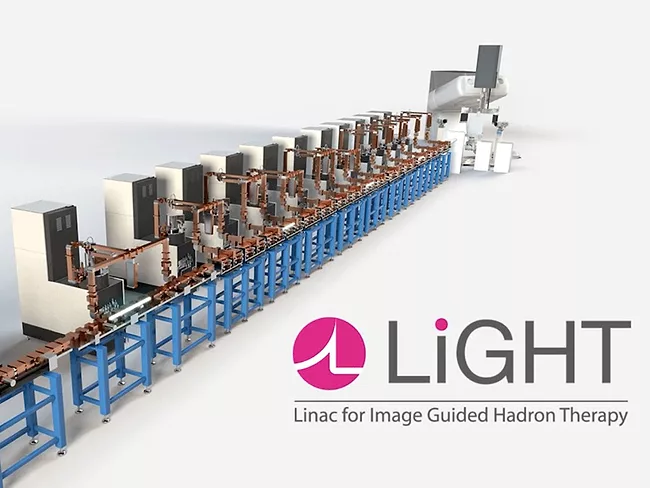
A brighter future awaits radiotherapy if Flash and LIGHT live up to their promise. Announcements made last week by Varian Medical Systems and Advanced Oncotherapy plc indicate results should be seen soon. Varian reported that the first human clinical trial of Flash, Fast-01, completed its treatment phase last week at the Cincinnati Children’s/University of Cincinnati Health Proton Therapy Center. Advanced Oncotherapy plc presented results from a modeling study of Linac for Image Guided Hadron Therapy (LIGHT) technology at the American Society for Radiation Oncology (ASTRO) 2021 Annual Meeting demonstrating that LIGHT enables both the high, super-quick dose delivery of Flash and good conformality of dose delivery to tumor tissue.
On the last day of this year’s Molecular Targets meeting, an annual joint conference of the American Association for Cancer Research, the National Cancer Institute and the European Organization for the Research and Treatment of Cancer, the final plenary went from molecular to macro in a lively discussion of the biggest roadblock in cancer drug development, and what can be done to improve it.

 RSS
RSS