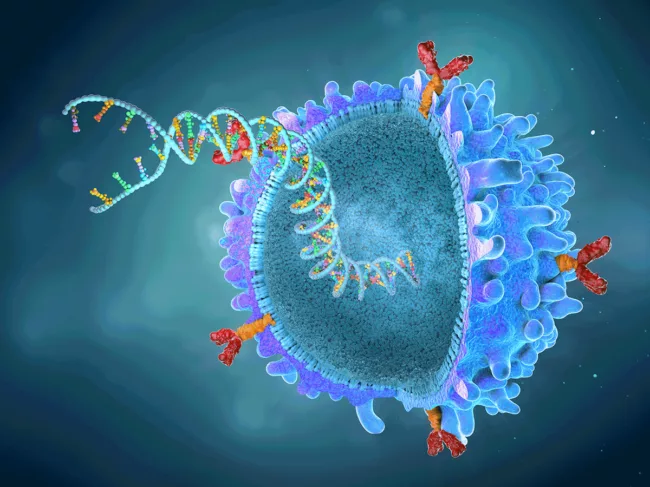
Trastuzumab-based chemotherapy has demonstrated clinical benefits in the treatment of HER2+ breast cancer. There is a percentage of patients who do not respond to therapy and have a poorer prognosis than those who respond. To better understand the mechanisms behind trastuzumab resistance, researchers in China studied the role of transcription elongation factor A protein-like 9 (TCEAL9) in resistance to trastuzumab-based chemotherapy in HER+ breast cancer.
Inhibitors of cyclin-dependent kinase 4 (CDK4) and CDK6, such as palbociclib, have significantly improved progression-free survival of several breast cancer types, such as hormone receptor-positive, HER2-negative luminal breast cancers, with about 40% being unresponsive or refractory to therapy; the main cause of resistance is the selection of mutant clones in the target oncoprotein.
Data presented at the American Society of Hematology annual meeting and exposition, including: Alphamab Oncology, Aptose, Ascentage, Astrazeneca, Beigene, Carsgen, Junshi, JW, Starpharma, Tessa.
The histone-lysine N-methyltransferase 2A (KMT2A; also known as mixed-lineage leukemia 1 [MLL1])-fusion proteins require direct interaction with the nuclear scaffolding protein menin in order to form menin-KMT2A complex, which plays a key role in the transcription of multiple leukemogenic target genes. On the basis of this, it is hypothesized that blocking the menin-KMT2A interaction by small-molecule inhibitors could be a promising new strategy for the treatment of KMT2A-altered and NPM1-mutant acute myeloid leukemia (AML).
Type I JAK2 inhibitors improve symptoms and outcomes of patients with myeloproliferative neoplasms (MPNs), but mutant allele JAK2 VF remains unchanged with this therapy. Type II JAK2 inhibitors bind the inactive conformation of the kinase domain and reduce the fraction of JAK2 VF mutant allele in vivo, suggesting an improved approach for JAK2 inhibition. Ajax Pharmaceuticals Inc. presented preclinical data on the type II JAK2 inhibitor AJ1-10502 for the treatment of MPNs.
Hepcidin deficiency in hereditary hemochromatosis (HH) leads to increased absorption of dietary iron and thus iron overload. Rusfertide is a hepcidin mimetic peptide that has shown efficacy at reducing the need for therapeutic maintenance phlebotomy in patients with HH. Researchers aimed to evaluate the benefits of cotreatment with a hepcidin mimetic peptide plus the rusfertide analogue PN-23114 (Protagonist Therapeutics Inc.) at 7.5 mg/kg t.i.w. and phlebotomy in a murine model of HH.
Rearrangement of the KMT2A gene is a recurrent mutation in acute myeloid leukemia (AML) that leads to poor outcomes in patients due to increased rate of relapsed and refractory disease. The identification of novel targets and potential therapies is crucial for patients with KMT2A-rearranged leukemias.
TSC22 domain family member 3 (TSC22D3) is a glucocorticoid-induced gene that plays a key regulatory role in immunosuppression and cell proliferation. Its prognostic usefulness in acute myeloid leukemia (AML) has not been deeply investigated yet.
 RSS
RSS