In tumors with amino acid deprivation, eIF-2α kinase GCN2 is activated and triggers a signaling response to promote cell survival and proliferation. This is important in high metabolically active hematological cancers, such as acute myeloid leukemia (AML).
AR-V7 is the most clinically relevant androgen receptor (AR) splice variant associated with endocrine resistance and poor prognosis in patients with prostate cancer.
Researchers from Zhuhai Grit Biotechnology Co. Ltd. recently presented preclinical characterization of a new genetically modified tumor-infiltrating lymphocyte (TIL) product, GT-216, being developed for the treatment of solid tumors.
Researchers from Biocytogen Pharmaceuticals (Beijing) Co. Ltd. presented the development of a humanized VEGFA model (B-hVEGFA mice) as a new tool for in vivo testing of VEGFA-targeting therapeutics.
Using its artificial intelligence/machine learning platform, Aurigen, Auron Therapeutics Inc. has identified histone acetyltransferase KAT2A/B as a driver of tumor cell plasticity and designed new small-molecule degraders of KAT2A/B.
Despite GTPase KRAS being the most common mutated oncogene in human cancers, there is still an unmet medical need for treating KRAS G12C-mutated cancers.
Researchers from Astrazeneca plc reported preclinical data for AZD-8421, a selective cyclin-dependent kinase 2 (CDK2) inhibitor, currently being evaluated in early-phase clinical trials as a treatment for solid tumors.
The leukocyte immunoglobulin-like receptor B2 (LILRB2), also known as ILT4, is an immunoreceptor tyrosine-based inhibitory motif (ITIM)-containing receptor that is widely expressed on immunosuppressive myeloid cells in the tumor microenvironment.
Mutations in GTPase KRAS occur in about 25% of human cancers, with the KRAS G12V mutation being one of the most frequent variants, and lead to activation of the MAPK pathway, thus promoting tumorigenesis.
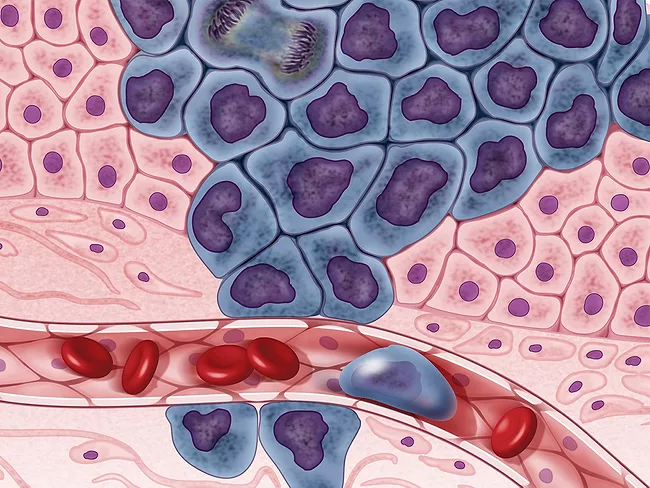
Prior to this year’s Annual Meeting of the American Association for Cancer Research (AACR), it had been 14 years since metastasis had been the subject of a plenary session. So, the Tuesday session on “Evolution of the genome, microenvironment, and host through metastasis” had plenty of new insights to share.
 RSS
RSS