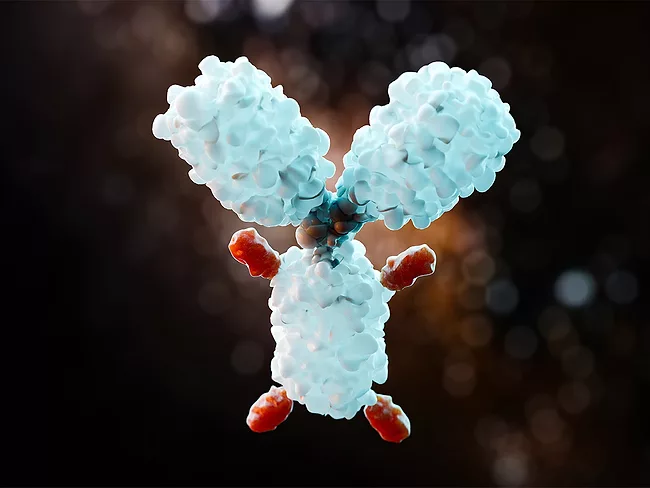
Valanx Biotech Gmbh has secured €3 million (US$4 million) in funding to advance its lead antibody-drug conjugate (ADC) program. The financing will enable preclinical development of VLX-ADC-001.
Synnovation Therapeutics Inc. has reported Werner syndrome ATP-dependent helicase (WRN; RECQ3; RECQL2) inhibitors reported to be useful for the treatment of cancer.
Beijing Earthwise Technology Co. Ltd. has described E3 ubiquitin-protein ligase CBL-B (CBLB) inhibitors reported to be useful for the treatment of cancer.
Nanjing Synnocare Pharmaceutical Technology Co. Ltd. and Shanghai Synnocare Biopharmaceuticals Co. Ltd. have patented ATP-dependent RNA helicase A (DHX9) inhibitors with potential for use in the treatment of cancer, autoimmune and viral infections.
CSN5, a key COP9 signalosome subunit, regulates protein stability in the cell cycle, apoptosis and DNA repair. Its overexpression in cancer promotes tumor growth, metastasis and therapy resistance, making it a potential therapeutic target.
C-Further, an international consortium supporting new therapeutics for pediatric cancers, has unveiled the first early-stage therapeutic programs in its pipeline. The company said it is advancing CF-012 and CF-033 through its collaborative model.
Similarities among three pediatric brain tumors that arise in different structures of the CNS – pineoblastoma, retinoblastoma and Group 3 medulloblastoma – have been linked to their shared origin during pineal gland development. Scientists at St. Jude Children’s Research Hospital have identified the molecular signatures that drive these tumors from pinealocyte progenitor cells that conserve a common differentiation program, providing a shared therapeutic target for these three cancer types.
Shanghai Deep Potential Technology Co. Ltd. has discovered serine/threonine-protein kinase PLK1 (STPK13) inhibitors reported to be useful for the treatment of cancer.
Shanghai Chempartner Co. Ltd. has identified antibody-drug conjugates (ADCs) comprising HER2 (erbB2) or tumor-associated calcium signal transducer 2 (TACSTD2; TROP2) covalently linked to eribulin through a linker reported to be useful for the treatment of cancer.
 RSS
RSS