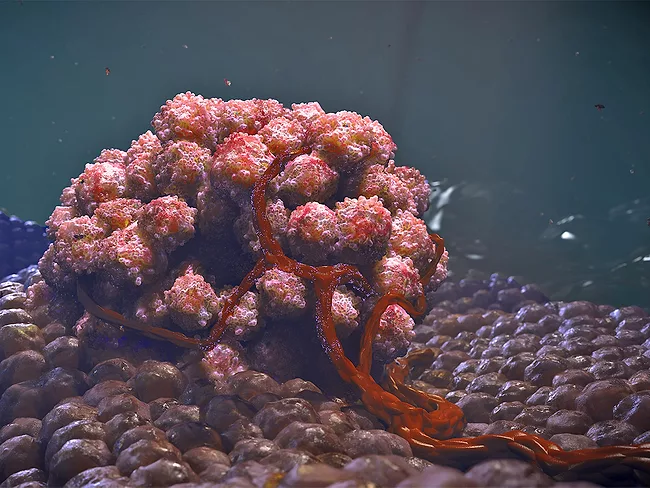
In a recently published study, researchers from Shandong Second Medical University and collaborators synthesized a new dual-gold(I) complex, named QB-1561, and tested its potential to inhibit drug-resistant cancer cells overexpressing ATP-binding cassette (ABC) transporters
Researchers from Universitatsklinikum Heidelberg presented data from a study that investigated the role of strawberry notch homolog 1 (SBNO1) in the development of hepatocellular carcinoma (HCC) and cholangiocarcinoma (CCA).
A recent study by researchers from Nanyang Technological University identified Fanconi anemia complementation group M (FANCM) as a crucial regulator of alternative lengthening of telomere (ALT), aiming to develop new antisense oligonucleotides (ASOs) to suppress its function.
Researchers from Cedars-Sinai Medical Center presented the preclinical efficacy of KROS-401, an IL-4/IL-13 blocking peptide that effectively reprograms macrophages in glioma models.
Guangdong Fapon Biopharma Inc. has obtained IND clearance from the FDA for FP-008, its first-in-class immunocytokine for patients with solid tumors refractory to anti-PD-1 therapy.
Shanghai Institute of Materia Medica of the Chinese Academy of Sciences and Zhejiang University have jointly discovered N2-3-fluoro-5-substituted phenyl-2-aminopyrimidine derivatives.
Work at the Chinese University of Hong Kong has led to the identification of bilobalide derivatives reported to be useful for the treatment of cancer, Alzheimer’s and Parkinson’s diseases.
Kind Pharmaceuticals LLC has patented substituted benzocyclobutene compounds acting as erythropoietin (EPO) production inhibitors reported to be useful for the treatment of cancer and polycythemia.
Epstein-Barr virus (EBV), a member of the herpesvirus family, is a highly common human pathogen that can remain latent in B lymphocytes after the primary infection. Although this latent state is frequently asymptomatic, in some cases, it can lead to the development of malignancies such as Burkitt lymphoma, Hodgkin lymphoma, nasopharyngeal carcinoma, and some gastric cancer subtypes.
 RSS
RSS