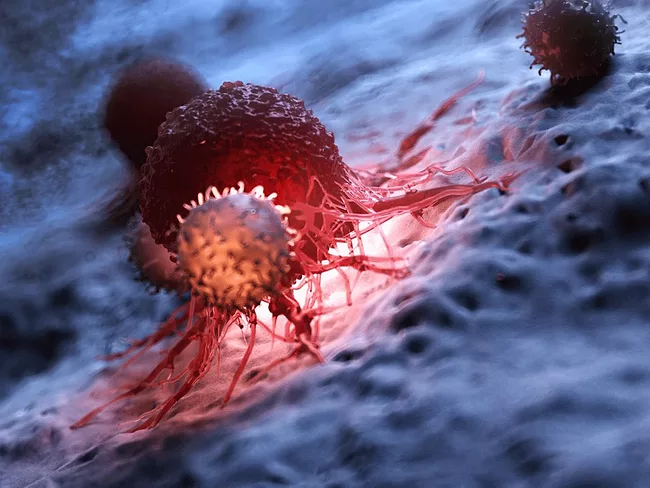
Inceptor Bio LLC and Shenzhen Grit Biotechnology Co. Ltd. have established a strategic partnership to advance IB-T101, a CAR T therapy targeting solid tumors.
Tigatx Inc. has been awarded up to $33.5 million in funding by the Advanced Research Projects Agency for Health and a 2-year $2 million Direct to Phase II Small Business Innovation Research grant from the National Cancer Institute.
Clarity Pharmaceuticals Ltd. has expanded its pipeline with a new fibroblast activation protein (FAP)-targeted radiopharmaceutical for the diagnosis and treatment of cancer. Clarity’s targeted copper theranostic targeting FAP was developed by combining an industry-leading FAP inhibitor with proprietary SAR chelator technology, which enables the use of copper-64 (64Cu) for imaging and copper-67 (67Cu) for the targeted treatment of various cancers.
Scientists at F. Hoffmann-La Roche Ltd. and Hoffmann-La Roche Inc. have divulged compounds acting as Toll-like receptor 7 (TLR7) and TLR8 agonists reported to be useful for the treatment of cancer.
KAT2A is a histone acetyltransferase that functions as a transcriptional activator which, together with its paralogue KAT2B, is markedly overexpressed in acute myeloid leukemia (AML) compared to in hematopoietic progenitor cells.

 RSS
RSS