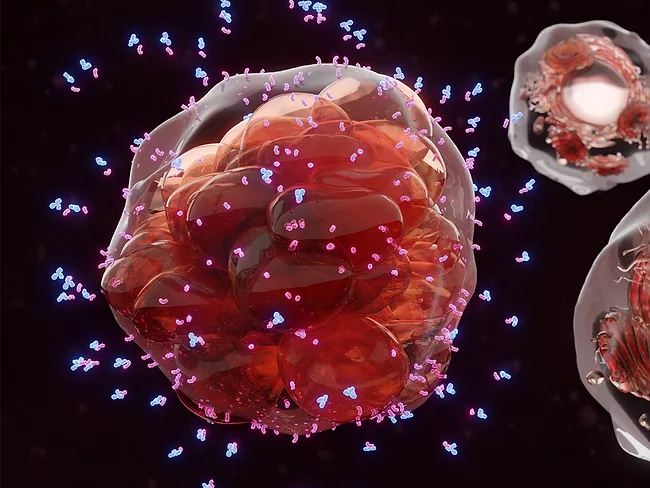
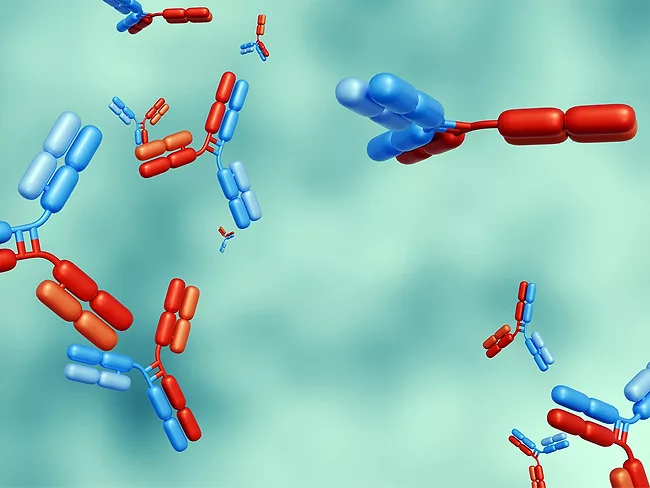
The major histocompatibility complex class I polypeptide-related sequences A and B (MICA/B) are frequently expressed by cancer cells. In a recently published study, researchers from Icahn School of Medicine at Mount Sinai hypothesized that the therapeutic efficacy of anti-MICA/B antibodies could be enhanced through Fc optimization with three point mutations in the Fc region: G236A, A330L and I332E (GAALIE).
Researchers from F. Hoffmann-La Roche Ltd. and collaborators reported the preclinical efficacy profile of mosperafenib (RO-7276389), a next-generation BRAF inhibitor designed as an MAPK paradox breaker. The compound selectively inhibits oncogenic RAF signaling while avoiding RAF dimer-driven ERK activation, thereby overcoming a key mechanistic limitation of first-generation BRAF inhibitors.
Incyte Corp. has developed and presented data for their CD70xCD3 bispecific antibody INCA-036873, which was designed to activate T cells and kill tumoral cells expressing CD70.
More effective treatments are needed for patients with myelodysplastic syndrome (MDS), a heterogeneous group of myeloid disorders that frequently progress to acute myeloid leukemia (AML). In a recent publication, Debiopharm SA and The Ohio State University demonstrate that MDS cells express CD37 and that both AML and MDS cells exhibit efficient internalization of this receptor. Debio-1562M, under development at Debiopharm, is a next-generation antibody-drug conjugate (ADC) targeting CD37.
DNA polymerase θ (POLθ) plays a central role in microhomology-mediated end joining (MMEJ), an error-prone DSB repair pathway. Under normal conditions, MMEJ acts as a backup repair mechanism. However, in HRR-deficient tumors, reliance on POLlθ-driven MMEJ is markedly increased, making POLθ essential for cancer cell survival. Researchers from Astrazeneca plc reported the discovery and characterization of AZD-4956, a POLθ inhibitor that can be used in combination with PARP inhibitors and other DNA-damaging agents.
New Approach Methodologies (NAMs) for drug development are transforming biomedical research by replacing or complementing animal models. More than 90% of experimental compounds fail in clinical trials, underscoring the need for strategies that better capture human biology. Many of these techniques were showcased at the 2026 American Association for Cancer Research (AACR) annual meeting.
Researchers from Ruijin Hospital and Shanghai Jiao Tong University have patented molecular glue degraders, specifically eukaryotic peptide chain release factor GTP-binding subunit ERF3A (GSPT1) degradation inducers that are potentially useful for the treatment of cancer, autoimmune disease and inflammatory disorders.
Solve Therapeutics Inc. has identified antibody-drug conjugates comprising antibodies covalently bound to camptothecin derivatives through a cleavable linker reported to be useful for the treatment of cancer.
Previous work showed that neurogenic transcriptional factors, such as NeuroD1 and Neurogenin 2, and small-molecule cocktails can reprogram glioma cells into neuron-like cells while also suppressing their proliferative and invasive phenotypes.
Cymirafen is a novel antibody-drug conjugate (ADC) from the University of California that targets leucine-rich repeat-containing G-protein coupled receptor 4 (LGR4)/LGR5/LGR6 and is composed of a potent cytotoxic payload, monomethyl auristatin E (MMAE), plus an Fc domain fused to the receptor binding domain of RSPO1.
 RSS
RSS