For people with the grim diagnosis of pancreatic cancer, the news may have gotten just a shade brighter. Researchers at the Mayo Clinic Comprehensive Cancer Center found that using 18-fluorodeoxyglucose (FDG) tracer with positron emission tomography (PET) provides a preoperative predictor of tumor response to chemotherapy and survival in patients with borderline resectable or locally advanced pancreatic cancer. The finding could change recommended practice for one of the deadliest forms of cancer and improve outcomes for patients.
Collagen is the most abundant protein in the human body, which would seem to make it an unlikely source for an immunotherapy target. But it is where researchers from Immatics Biotechnologies GmbH and the University of Pennsylvania have found a target that was expressed on stromal cells in a number of different solid tumors, but very rare in normal tissues.
Cell Envision Ltd. completed an angel round that will help expand its presence in the U.S. and Europe. Taiwan-based Cell Envision has developed a self-assembled cell arrangement (SACA) monitoring system that can improve patient survival rates of cancer, together with enhancements in reproductive medicine.
Recent U.S. FDA actions could transform decades of prostate cancer care. Two companies focused on prostate cancer received good news from the FDA for their artificial intelligence (AI)-driven software. Bot Image Inc. gained FDA clearance for its medical device computer-aided detection and diagnostic tool, Prostatid. The agency also provided FDA investigational device exemption for Avenda Health Inc.’s Focalpoint ablation system that enables more accurate mapping of a patient’s prostate cancer for better surgical results.
The largest study to date assessing the use of cell-free DNA (cfDNA) analysis to detect cancer in advance of symptoms has completed enrollment of 140,000 healthy volunteers. The study, being run in the U.K. National Health Service (NHS) by the charity Cancer Research UK (CRUK) and cfDNA diagnostics specialist Grail Inc., is using Grail’s Galleri test to look for cancer-specific methylation patterns in blood.
Sengine Precision Medicine Inc. boosted its total fundraising to $19 million with the recent closing of a $10 million series A2 led by the Washington Research Foundation with support from Alethea Fulcrum Fund, Vincere Capital Biotech LLC, Bangarang Group and others. The A2 follows on an earlier $5 million raised in the original series A. Sengine’s Paris Test predicts drug responses using a patient’s cancer cells to grow a tumor organoid that replicates the functionality and genomic characteristics of the original tumor, enabling hyper-personalization of cancer treatment.
The U.S. FDA has updated its data on the number of fatalities across globe associated with breast implant-associated anaplastic large cell lymphoma (BIA-ALCL), which has now reach 59 fatalities. That number is up from 33 reported in July 2019 but is also a number the agency continues to assert may be a significant undercount.
Epigenetic test company Volitionrx Ltd. appointed contract research organization (CRO) Diagnostic Oncology CRO LLC (DXOCRO) to conduct development and clinical validation studies for its Nu.Q product portfolio in the U.S. DXOCRO will carry out large-scale finding studies across the U.S. using Henderson, Nev.-based Volition's cancer tests to determine clinical utility in sepsis and cancer. The trials are aimed at U.S. FDA approval of the products.
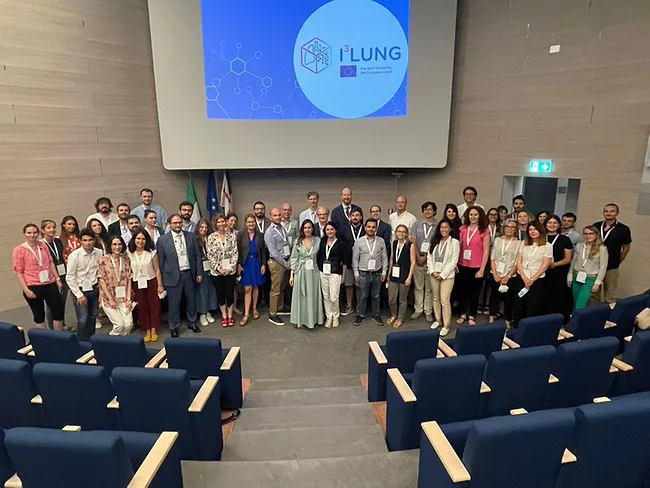
The European Commission launched a new research initiative with $10 million from Horizon Europe, the E.U.’s research and innovation program, to create a cutting-edge decision-making tool to help clinicians and patients select the best lung cancer treatment based on each patient’s specific needs and circumstances. The I3Lung initiative brings together 16 international partners from Germany, Belgium, Denmark, Italy Sweden, Switzerland, the U.S. and Israel.
No one denies that fewer new drugs will be a consequence of the Medicare drug pricing provisions the Democrats are trying to push through the U.S. Congress ahead of the midterm election campaign season. Less attention has been paid to the negative impact on drug-device combinations and new diagnostics that accompany innovative treatments.
 RSS
RSS