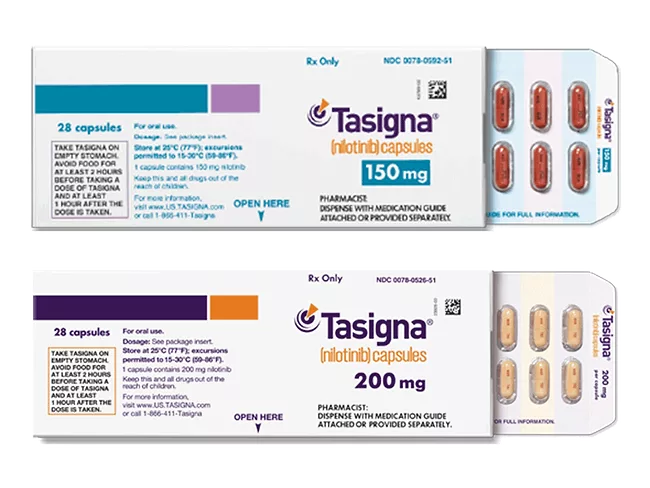
Expanding its mandate to accelerate access to essential medicines to people in low- and middle-income countries, the Medicines Patent Pool signed its first voluntary licensing agreement for a cancer treatment, Novartis AG’s Tasigna (nilotinib). A twice-daily oral drug, Tasigna is a tyrosine kinase inhibitor included on the World Health Organization’s Model List of Essential Medicines as a second-line treatment for adult and pediatric chronic myeloid leukemia.
Radiopharm Theranostics Ltd.’s phase II F-18 Pivalate positron emission tomography trial in brain metastases saw positive results with high uptake regardless of the origin of primary tumors, showing that Pivalate could be used to monitor brain metastases.
Cascination AG reported the first thermal ablation of liver tumors to be performed in France using its CT-guided stereotactic planning and navigation system, CAS-One IR. The technology was used at Dijon Bourgogne University Hospital, where a dozen procedures have been carried out in the Department of Diagnostic and Therapeutic Radiology.
The University of Texas MD Anderson Cancer Center and Radiopharm Theranostics Ltd. have launched Radiopharm Ventures LLC, a joint venture (JV) that will develop radiopharmaceutical therapies for cancer. Radiopharm Theranostics owns 51% of shares in the new entity, while MD Anderson owns 49%.
A new generation of chimeric antigen receptor (CAR) T-cell therapies with advanced functions could hold the answer to improved safety and efficacy for these effective but potentially dangerous cancer therapies, shows research led by Boston University. The scientists showed it is possible to add ‘on’ or ‘off’ switches to CAR T cells, which can be activated using oral drugs with a known safety profile.
For people with the grim diagnosis of pancreatic cancer, the news may have gotten just a shade brighter. Researchers at the Mayo Clinic Comprehensive Cancer Center found that using 18-fluorodeoxyglucose (FDG) tracer with positron emission tomography (PET) provides a preoperative predictor of tumor response to chemotherapy and survival in patients with borderline resectable or locally advanced pancreatic cancer. The finding could change recommended practice for one of the deadliest forms of cancer and improve outcomes for patients.
Collagen is the most abundant protein in the human body, which would seem to make it an unlikely source for an immunotherapy target. But it is where researchers from Immatics Biotechnologies GmbH and the University of Pennsylvania have found a target that was expressed on stromal cells in a number of different solid tumors, but very rare in normal tissues.
Cell Envision Ltd. completed an angel round that will help expand its presence in the U.S. and Europe. Taiwan-based Cell Envision has developed a self-assembled cell arrangement (SACA) monitoring system that can improve patient survival rates of cancer, together with enhancements in reproductive medicine.
Recent U.S. FDA actions could transform decades of prostate cancer care. Two companies focused on prostate cancer received good news from the FDA for their artificial intelligence (AI)-driven software. Bot Image Inc. gained FDA clearance for its medical device computer-aided detection and diagnostic tool, Prostatid. The agency also provided FDA investigational device exemption for Avenda Health Inc.’s Focalpoint ablation system that enables more accurate mapping of a patient’s prostate cancer for better surgical results.
The largest study to date assessing the use of cell-free DNA (cfDNA) analysis to detect cancer in advance of symptoms has completed enrollment of 140,000 healthy volunteers. The study, being run in the U.K. National Health Service (NHS) by the charity Cancer Research UK (CRUK) and cfDNA diagnostics specialist Grail Inc., is using Grail’s Galleri test to look for cancer-specific methylation patterns in blood.
 RSS
RSS