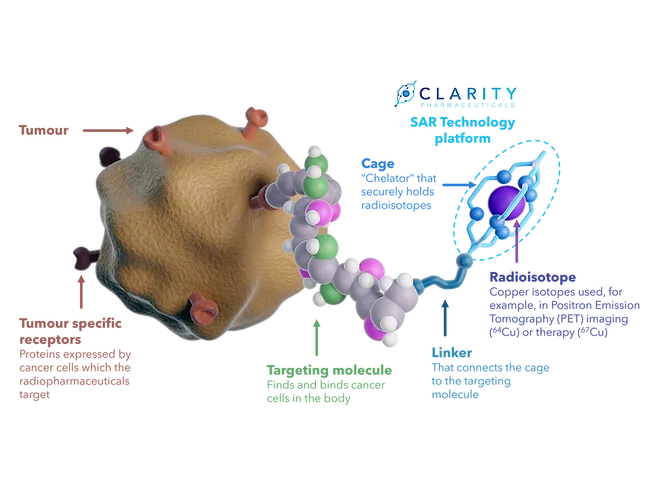
Clarity Pharmaceuticals Ltd. is progressing three of its targeted copper theranostics through the clinic that are based on its sarcophagine technology that securely holds copper isotopes inside a cage-like structure, called a chelator. The SAR technology allows a unique pairing of copper isotopes, copper-64 and copper-67, for both cancer diagnosis and therapy.
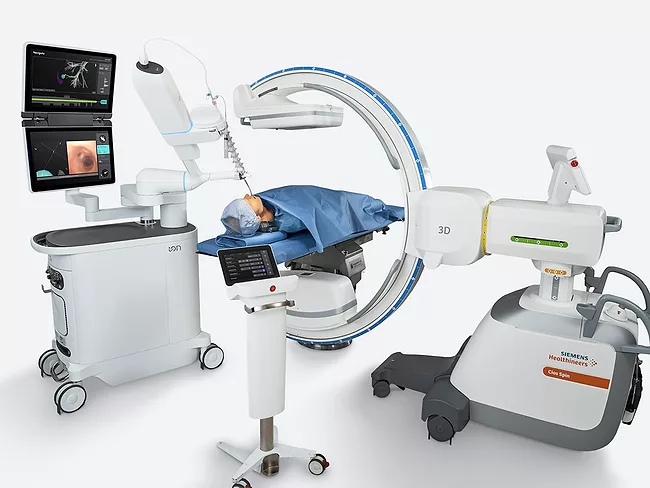
Lung cancer claims more lives each year than any other cancer, making early and accurate diagnosis crucial to improving survival rates. To that end, the U.S. FDA has cleared the integration of Intuitive Surgical Inc.’s Ion endoluminal system and Siemens Healthineers AG’s Cios Spin mobile imaging cone-beam CT imaging technology to enhance robotic lung biopsies.
A French public-private consortium of seven med-tech companies, research institutes and specialist cancer hospitals is launching a new project to standardize and improve access to health care data for cancer research. Paris-based Arkhn SAS and Owkin SAS joined forces with INRIA, the French national institute for research in digital science and technology, to launch Oncolab.
Immunovia AB is progressing a study evaluating its Immray Pancan-d blood test for the early detection of pancreatic cancer in patients with new onset type 2 diabetes. Studies have found that type 2 diabetes is a major risk factor for developing pancreatic cancer, and the screening of molecular biomarkers may help patients access treatment before they develop symptoms. The company’s lab-developed test (LDT) measures nine serum biomarkers that, when combined in an algorithm, can detect pancreatic ductal adenocarcinoma.
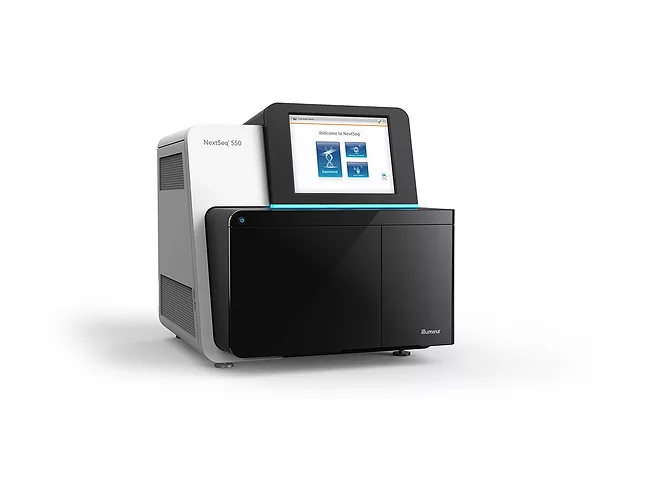
A new cancer genomic test co-developed by Illumina Inc. and Merck & Co. Inc. will soon be available globally, excluding the U.S. and Japan. The research use only Trusight Oncology 500 HRD test is designed to identify genetic mutations used in the evaluation of homologous recombination deficiency (HRD), a signal that can indicate tumor formation. The product combines HRD technology from genetic test maker Myriad Genetics Inc. and next generation sequencing (NGS) technology from Illumina.
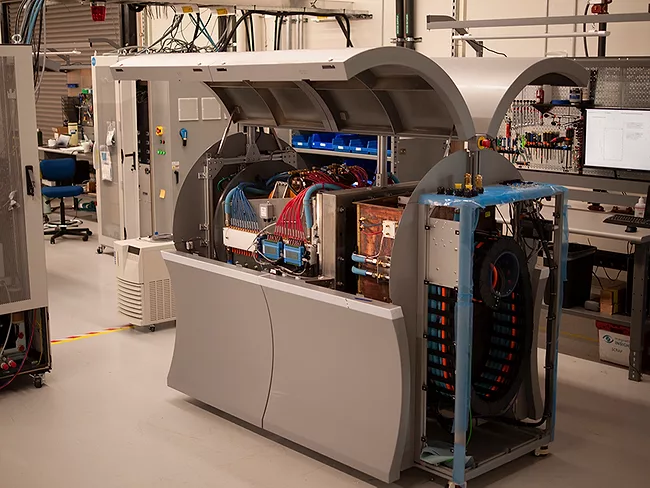
Investors are backing imaging diagnostics company Magnetic Insight Inc. with $17 million to develop its magnetic particle imaging (MPI) technology. The clinical imaging application consists of two core technologies: hardware and a tracer that, together, produce 3D images of how a patient’s body works. Venture firm Celesta Capital led the series B round with Alumni Ventures Group, Gaingels and existing investors 5AM Ventures and Sand Hill Angels participating.
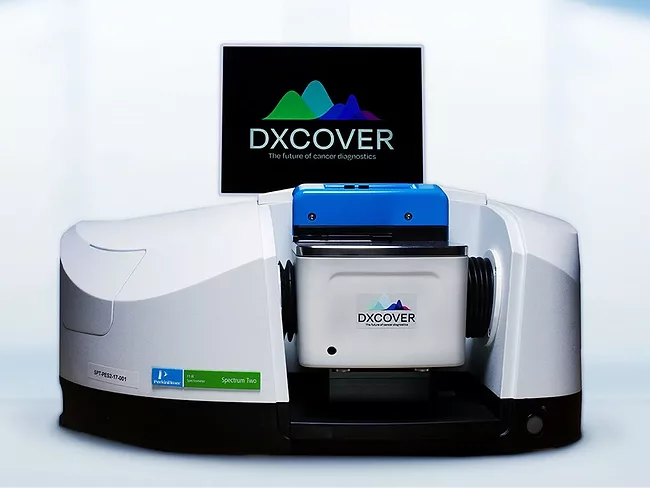
A presentation at the American Society of Clinical Oncology (ASCO) 2022 annual conference demonstrated that the Dxcover Cancer Liquid Biopsy differentiated between patients with cancer and healthy controls and detected more than 90% of stage I malignancies across a broad range of cancers. Dxcover Ltd. provided more details on its new approach to the search for reliable, rapid screening for multiple malignancies at the 12th International Conference on Clinical Spectroscopy on June 21.
Prognomiq Inc. secured access to 800,000 anonymized biological samples for analysis and detection of dynamic cancer biomarkers as part of a new partnership struck with Kahn-Sagol-Maccabi (KSM), the research and innovation center of Maccabi Healthcare Services, Israel’s largest health maintenance organization. The partnership will enable the creation of a biomarker platform the organizations hope will facilitate early diagnosis and improved outcomes for cancer patients using Prognomiq’s multiomics platform.
Biocartis Group NV received CE-marking of its Idylla Gene Fusion lung cancer biomarker test. The automated panel is designed to detect chromosomal translocations that generate fusion genes and cause non-small-lung cancer (NSCLC). Mechelen, Belgium-based diagnostics company Biocartis recently reported results from a study that found the assay enables rapid screening with quicker turnaround and lower tissue requirements compared to standard methods.
Los Angeles-based cancer diagnostics company Nonagen Bioscience Corp. obtained CE marking for its Oncuria immunoassay for bladder cancer. The multiplex urine test is designed to detect the concentration of 10 proteins that are associated with bladder cancer in urine samples. Clinical studies found the test has a 93% sensitivity and 93% specificity for detecting bladder cancer. The test is also designed to predict whether people are more likely to respond to bacillus Calmette-Guérin (BCG) therapy, a first-line treatment for bladder cancer.
 RSS
RSS