The U.S. FDA has issued a final guidance for non-clinical performance testing for tissue containment bags used during power morcellation procedures, and the FDA had recommended in 2020 containment bags always be used during morcellation procedures. Despite the FDA’s advisory, a survey of surgeons published last year suggested that most of these procedures are not done with these containment systems, possibly because the rate of procedure-related complications is considerably higher when containment is used.
Freenome Inc. has acquired U.K.-based immunodiagnostics developer Oncimmune Ltd. for £13 million (US$16 million), in a move that bolsters Freenome’s frontline early cancer detection efforts. While Freenome has been largely focused on getting the U.S. FDA’s nod for its colorectal cancer test, Oncimmune already has a CE-IVD marked EarlyCDT Lung blood test, an autoantibody platform and an R&D pipeline of over seven cancer detection signals.
Barely a month and a half after its radioconjugate approach landed a potential $1.7 billion deal with Novartis AG, Bicycle Therapeutics plc drew another big radiopharma player to the table, signing a collaboration agreement with Bayer AG to use Bicycle’s peptide technology to discover and develop radiotherapies against cancer targets. Terms are similar to the Novartis deal, with Bayer paying $45 million up front and Bicycle eligible for development and commercial milestones totaling up to $1.7 billion, and underline the growing interest in the radiopharma space.
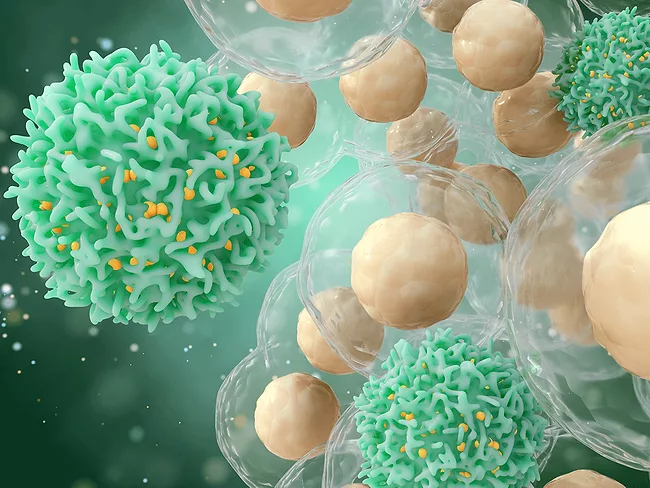
A method for parallel sequencing of single-cell extrachromosomal circular DNA (ecDNA) and full-length mRNA transcriptomes has enabled new insights into the roles of ecDNA in cancer progression, researchers from Charité hospital and the Max Delbrück Center for Molecular Medicine reported in Nature Genetics on May 8, 2023. Circular DNAs are present in at least a third of cancer cells, and their presence correlates with poor prognosis in many cases. They can carry driver genes that have separated themselves from their chromosome of origin, and some research suggests that they serve as “reserve copies” of driver genes. Boundless Bio Inc. is in phase I trials targeting ecDNAs.
While sorting out a second phase III study design for its cancer therapy and light device with the U.S. FDA, Soligenix Inc. produced positive results from a compatibility study evaluating Hybryte (synthetic hypericin sodium) for treating early stage cutaneous T-cell lymphoma (CTCL). That data, according to Soligenix, bolster findings from the phase III FLASH study, which used the same combination in treating CTCL. According to Christopher Schaber, Soligenix CEO, the important corporate objectives for the compatibility study were to replicate results seen in the FLASH study.
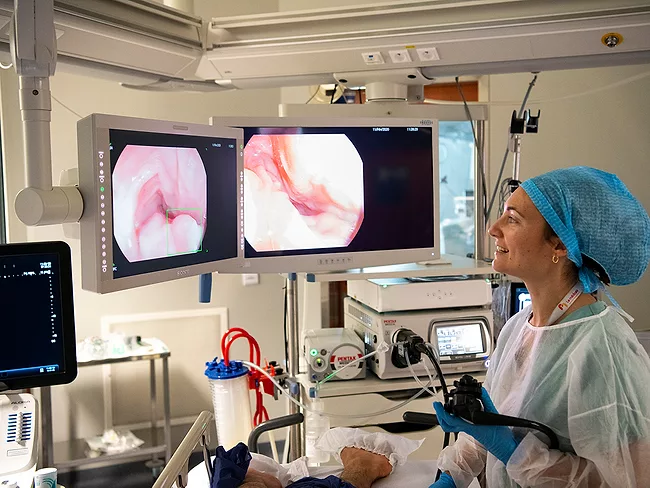
The gastroenterology team at the Paoli-Calmettes Institute in Marseille, France is conducting a therapeutic trial using G-Eye, the latest generation of colonoscope from Hanofar, Israel-based Smart Medical Systems Ltd. “The aim is to increase the detection rate of polyps thanks to a new type of device that can be connected to the current colonoscopes on the market,” Jean-Philippe Ratone, the principal investigator of the study and gastroenterologist at the Paoli-Calmettes Institute told BioWorld.
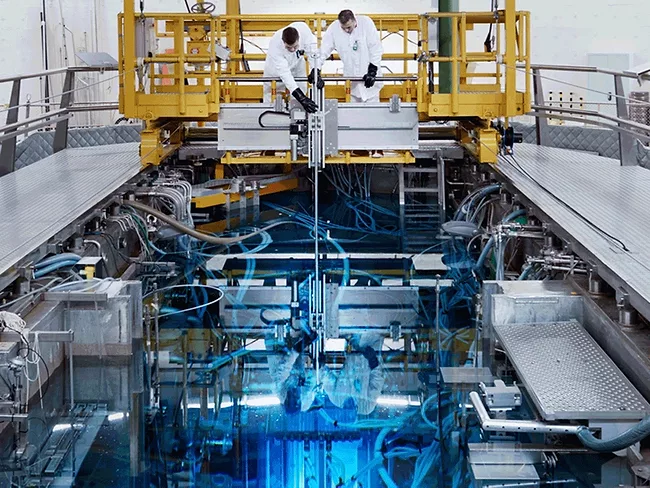
Supply issues are a “major concern for the whole industry and for the medical community as well, because they see targeted radiotherapy as a very promising field with very interesting results in the clinic, but they are concerned that drugs may not be available for a large number of patients, and it is a legitimate concern,” Orano Med SAS CEO Julien Dodet said. Companies such as Orano, Fusion Pharmaceuticals Inc. and Telix Pharmaceuticals Ltd. are working to meet those supply challenges.
Radiopharmaceuticals require sophisticated infrastructure, with just-in-time radioactives delivered to patients who must isolate while receiving the therapy. Quality control and numerous layers of regulation makes for a daunting space to enter. Although the demand for medical isotopes is growing, the facilities that can make these products are aging, and one of the major facilities globally has already come offline. Next steps for the industry will be to solve supply and regulatory challenges as clinical trial data start to differentiate therapies in the pipeline.
The Biden administration has released the National Cancer Plan, a framework that expands and builds on the Cancer Moonshot program which came into being in 2016. The National Cancer Plan includes a strategies section that calls for development of new methods for detecting cancer and new imaging technologies for early cancer detection, just two provisions that would seem to portend good times ahead for companies that manufacture these products.

 RSS
RSS