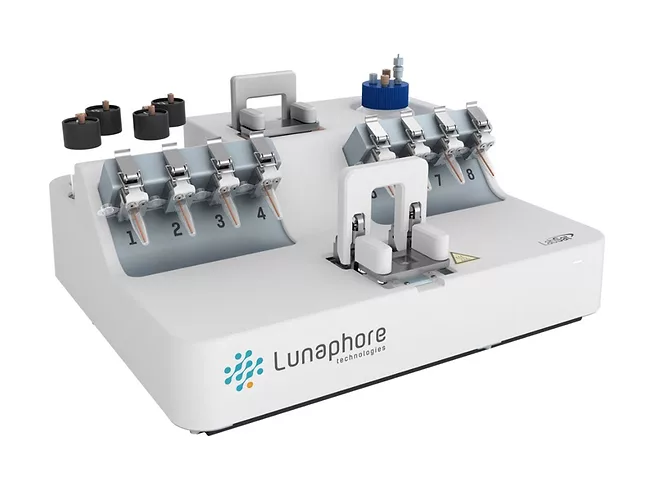
Five months after raising $45 million, Lunaphore Technologies SA reported its consent to be acquired by Bio-Techne Corp., a reagents and instruments manufacturer for the diagnostic market. This acquisition by the Nasdaq-listed bio-tech giant, “will enable us to begin a worldwide commercial rollout of our products and automated spatial biology technology,” Ata Tuna Ciftlik, co-founder and CEO of Lunaphore Technologies, told BioWorld. The amount of the transaction was not disclosed. This acquisition is expected to close in the third quarter of 2023.
Sinotau Pharmaceutical Group raised ¥1.1 billion (US$152 million) in a financing round to develop its radiopharmaceutical drugs for diagnostic and therapeutic interventions.
Artificial intelligence (AI) continues to entice. On the exhibition floor at the 2023 Congress of the European Academy of Neurology, one company’s booth featured “Mindart” technology. A passersby could answer a short series of prompts, and get a unique image based on the input made by generative AI. Entertainment aside, medically speaking, AI applications “are still research,” Riccardo Soffietti told his audience at one of several sessions devoted to AI. “But obviously, research is the future.”
Isotope Technologies Munich SE (ITM) raised $280 million to support the expansion of its broad targeted radionuclide therapies oncology pipeline. This equity investment round was led by Temasek holdings Pte Ltd. with participation from Blackrock Alternatives, Qatar Investment Authority, Nextech Invest Ltd., Athos KG and Carbyne Equity Partners GmbH.
Precision diagnostics company Inoviq Ltd.’s stock soared 44% on the news that its breast cancer diagnostic, SubB2M/CA15-3, detected all stages of breast cancer with 87% accuracy, 81% sensitivity and 93% specificity. The clinical validation study that included 483 samples outperformed the standard of care CAS15-3 test, demonstrating an area under the curve (AUC) of .93 compared to .70.
The U.K. government created a new £21 million ($US26.55 million) fund to accelerate the roll out of artificial intelligence (AI) diagnostics and treatment tools across the NHS. The AI Diagnostic Fund will enable hospitals to bid for funding to speed up the deployment of the most promising AI imaging and decision support tools to help patients with cancers, strokes and heart conditions.
Carthera SA raised €37.5 million (US$40 million) in a series B funding round that will allow the company to embark on the first pivotal trial of its Sonocloud technology. The Sonocloud-9 is the only implantable ultrasound device that can repeatedly open the blood-brain barrier and deliver effective treatment in patients with recurrent glioblastoma, Frédéric Sottilini, CEO of Carthera, told BioWorld.
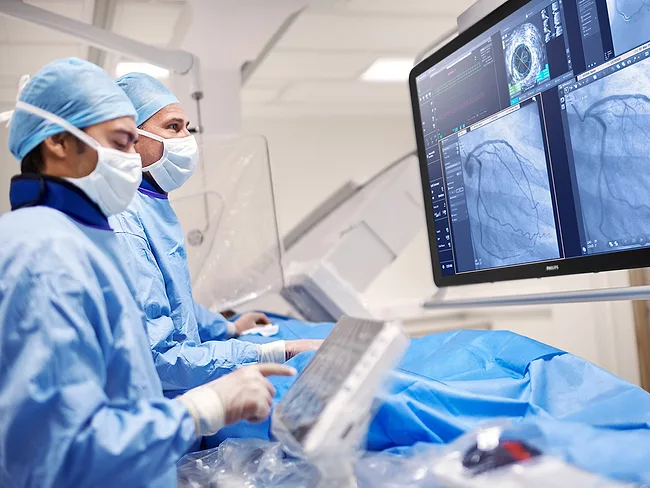
The imaging and advanced guidance for workflow optimization in interventional oncology consortium (IMAGIO) consortium of clinical partners in the EU, led by Royal Philips NV, has been awarded $26 million under the Innovative Health Initiative (IHI) to carry out research into less invasive cancer therapies.
The near $50 million cash injection Nvision Imaging Technologies GmbH recently received is “instrumental” as it will allow the company to take its hyperpolarized magnetic resonance imaging (MRI) technology to labs worldwide, CEO Sella Brosh told BioWorld. The German startup’s quantum technology makes MRI imaging up to 100,000 times more precise which will allow for the earlier diagnosis of cancer, better assessment of the risks involved and the ability to assess in a matter of days, whether treatment is working.
As it develops a new metastasis-on-a-chip device based on microfluidic chip technology that provides a platform to capture and study highly metastatic cancer cells, Mettactics Ltd. is in the process of raising financing to develop its product to empower precision medicine. Founded in 2019, Hong Kong-based Mettactics developed a microfluidic device that can capture metastatic cells and carry out clinical tests to predict the drug response of patients based on the cells’ genetic signature.
 RSS
RSS