Europe was a bigger counterpart to China in pharmaceutical dealmaking than the U.S. last year, speakers at Chinabio Partnering Forum said April 23, and the trend is likely to continue in 2025 with the shuttering of U.S. capital and volatility ailing global markets.
The intriguing VEGFxPD-1 bispecific antibody space gained oomph with phase III results disclosed April 23 by Akeso Pharmaceuticals Inc. related to Harmoni-6, testing ivonescimab in combination with platinum-based chemotherapy compared with Tevimbra (tislelizumab, Beigene Ltd.), a PD-1 inhibitor also paired with platinum-based chemo in patients with locally advanced or metastatic squamous non-small-cell lung cancer irrespective of PD-L1 expression. Those data were followed by a green light from the U.S. FDA April 24 for marketing the PD-1 monoclonal antibody penpulimab in combination with cisplatin or carboplatin and gemcitabine for the first-line treatment of adult recurrent or metastatic non-keratinizing nasopharyngeal carcinoma.
Ascentage Pharma Group Corp. Ltd. said two of its novel candidates have been included in the 2025 Chinese Society of Clinical Oncology Guidelines, including its in-house developed Bcl-2 selective inhibitor, lisaftoclax (APG-2575), which is under review in China and could be the first domestically approved Bcl-2 inhibitor and the second global approval.
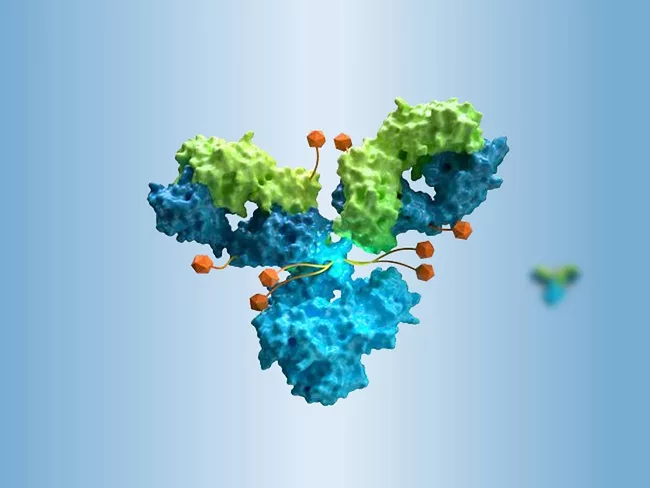
Orum Therapeutics Inc. on April 26 pulled the plug on a U.S.-based phase I study of ORM-5029, its lead oncology degrader antibody conjugate (DAC) asset, a decision that came months after the company first reported a patient death in November 2024.
Ono Pharmaceutical Co. Ltd. terminated development of CTX-177 (ONO-7018), its ex-oncology candidate in-licensed from Chordia Therapeutics Inc. in December 2020 for up to ¥52.9 billion (US$370.37 million).
Antibody-drug conjugate developer Duality Biotherapeutics Inc. debuted on the Hong Kong Stock Exchange (HKEX) with a HK$1.64 billion (US$211.4 million) IPO April 15, making it one of the biggest offerings made under the HKEX’s Chapter 18A listing regime since 2020.
Telix Pharmaceuticals Ltd.’s glioblastoma theranostic, TLX-101, is showing promising overall survival in a phase II trial in recurrent high-grade glioma. The targeted radiation therapy, combined with external beam radiation therapy, demonstrated a median overall survival of 12.4 months from treatment initiation and 32.2 months from initial diagnosis. The results significantly outperform the 9.9-month median survival typically observed with radiation therapy alone in recurrent glioblastoma patients.
Antibody-drug conjugate developer Duality Biotherapeutics Inc. debuted on the Hong Kong Stock Exchange (HKEX) with a HK$1.64 billion (US$211.4 million) IPO April 15, making it one of the biggest offerings made under the HKEX’s Chapter 18A listing regime since 2020.
Phase I/II trial results of sacituzumab tirumotecan (sac-TMT; Sichuan Kelun-Biotech Biopharmaceutical Co. Ltd.) published in Nature Medicine came a month after China’s National Medical Products Administration gave clearance to Kelun-Biotech’s supplemental NDA of sac-TMT to treat advanced non-small-cell lung cancer (NSCLC).
Cutaneous melanoma nearly always arises on parts of the body that receive abundant sun but, rarely, it can arise on parts that do not, such as the palms of the hands or soles of the feet. These rare cases of acral and mucosal melanomas, which often feature mutations in the transmembrane tyrosine kinase KIT, do not respond to current melanoma therapies.
 RSS
RSS