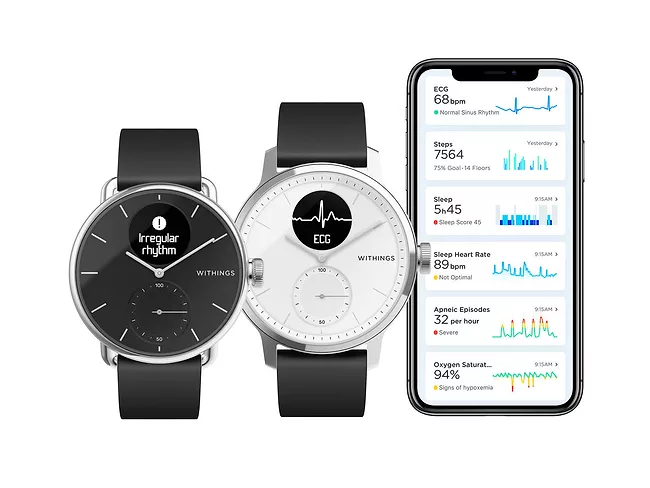
Issy-les-Moulineaux, France-based Withings SA said it’s planning to launch its latest product in the U.S. and Europe during the second quarter, the Scanwatch. It is expected to be the first smartwatch to offer both atrial fibrillation (AF) and sleep apnea detection; a CE mark and FDA clearance are both pending. Cardiac arrhythmia and sleep apnea are associated with one another and can be precursors to more serious health problems such as heart attack or stroke.
Neovasc Inc., of Richmond, British Columbia, has submitted a premarket approval application to the U.S. FDA for its Neovasc Reducer. The minimally invasive stent, which was granted breakthrough status in October 2018, is used to treat refractory angina.
The controversy over paclitaxel (PCT)-associated mortality in devices for the peripheral arteries is far from over, but another medical journal article has punched a hole in the credibility of the paclitaxel theory with the conclusion that the evidence is unequivocal and may be unpersuasive to physicians.
BOGOTA, Colombia – A startup in Mexico has developed an intelligent glove to diagnose cardiac diseases in seconds just by touching a patient’s chest. The invention could become available on the market by the end of 2020, when Soluciones Kenko, from Jalisco, Mexico, expects to hit the Mexican market with a futuristic solution for the health care sector.
Pq Bypass Inc., of Milpitas, Calif., said that the Centers for Medicare and Medicaid Services (CMS) has agreed to cover its TORUS 2 investigational device exemption (IDE) clinical trial, which is evaluating the Torus stent graft in the treatment of peripheral artery disease (PAD) in the superficial femoral artery (SFA).
Heart failure is a leading cause of disability and death in the U.S., but many cases are diagnosed late due to limited access to echocardiography, the primary method of detecting the condition. To address that need, the U.S. FDA has granted breakthrough device designation to Eko Devices Inc., of Berkeley, Calif., for an electrocardiogram (ECG)-based algorithm that could serve as an easily accessible screening tool for heart failure during routine physical exams.
While the U.S. Centers for Medicare and Medicaid Services (CMS) revisits its coverage policy for transcatheter mitral valve repair devices, several physician societies have drafted recommendations for operator and institutional volume requirements that could restrict the number of centers authorized to practice devices such as Abbott Park, Ill.-based Abbott Laboratories’ Mitraclip.

 RSS
RSS