The U.S. has granted final approval to Microvention Inc., a subsidiary of Terumo Corp. based in Aliso Viejo, Calif., for its Flow Redirection Endoluminal Device (FRED) for the treatment of brain aneurysms. The flow diverter – Microvention’s third PMA approval in less than two years – is the first in the U.S. to utilize a self-expanding, braided nitinol mesh to aid in rerouting blood flow away from the weakened area and promote occlusion.
Jenavalve Technology Inc., of Irvine, Calif., has won an FDA breakthrough device designation for its namesake transcatheter aortic valve replacement device, but Jenavalve said it will file for a humanitarian device exemption in the second half of 2020, suggesting that the device won’t be commercially available for at least another year.
While the disappearing drug-eluting stent seems to have faded from view for the time being, several manufacturers have invested in fabrication of drug-eluting stents with polymers that absorb once the drug of elution has done its work. A new study indicates that patients who have already had a myocardial infarction fare better on stents made with these biodegradable polymers, an outcome that may soon push second-generation DES devices into med-tech history.
LAS VEGAS – Over the past three years or so, voice technology has been on the rise, with hospitals looking to leverage it to help patients. Tech companies have taken notice; for example, Amazon assisted with technology to make voice skills HIPAA-compliant, with six skills unveiled as part of that effort.
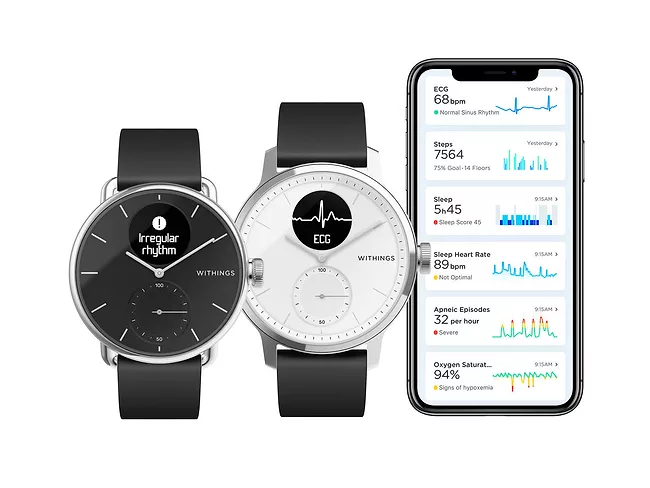
Issy-les-Moulineaux, France-based Withings SA said it’s planning to launch its latest product in the U.S. and Europe during the second quarter, the Scanwatch. It is expected to be the first smartwatch to offer both atrial fibrillation (AF) and sleep apnea detection; a CE mark and FDA clearance are both pending. Cardiac arrhythmia and sleep apnea are associated with one another and can be precursors to more serious health problems such as heart attack or stroke.
Neovasc Inc., of Richmond, British Columbia, has submitted a premarket approval application to the U.S. FDA for its Neovasc Reducer. The minimally invasive stent, which was granted breakthrough status in October 2018, is used to treat refractory angina.
The controversy over paclitaxel (PCT)-associated mortality in devices for the peripheral arteries is far from over, but another medical journal article has punched a hole in the credibility of the paclitaxel theory with the conclusion that the evidence is unequivocal and may be unpersuasive to physicians.
BOGOTA, Colombia – A startup in Mexico has developed an intelligent glove to diagnose cardiac diseases in seconds just by touching a patient’s chest. The invention could become available on the market by the end of 2020, when Soluciones Kenko, from Jalisco, Mexico, expects to hit the Mexican market with a futuristic solution for the health care sector.
 RSS
RSS