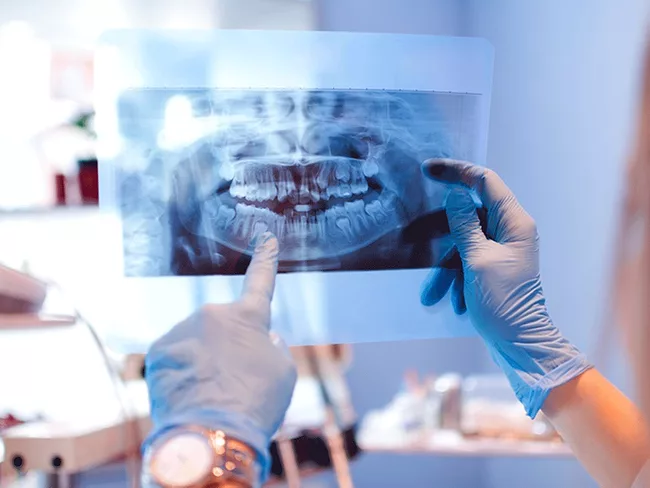
South Korean researchers led by Lee In-suk of Yonsei University have reported the most complete oral microbiome catalog to date, with more than 72,000 genomes. Detailed in Cell Host & Microbe on Nov. 12, 2025, the database is expected to serve as a universal platform for academia and enable “precision microbiome medicine” for the industry, Lee told BioWorld.
South Korean researchers led by Lee In-suk of Yonsei University have reported the most complete oral microbiome catalog to date, with more than 72,000 genomes. Detailed in Cell Host & Microbe on Nov. 12, 2025, the database is expected to serve as a universal platform for academia and enable “precision microbiome medicine” for the industry, Lee told BioWorld.
A four-way interagency initiative in South Korea, started in 2020, is working to bolster funding for the local medical device industry and grow homegrown devices for the global market.
Antimicrobial peptides such as human β-defensin 3 (hBD3) have shown promise as a treatment for periodontitis; however, their poor stability and high production costs have hindered their clinical translation until now.
Tetratherix Ltd. raised AU$45 million (US$25 million) in its IPO on the Australian Securities Exchange (ASX:TTX) to support clinical development of its Tetramatrix polymer biomaterial platform to support bone regeneration, tissue spacing and tissue healing.
The U.S. FDA has guidances on the books for dental products, but the it unleashed a quartet of guidances – ceramics and cements used in dental procedure – for dental products on the final Friday of September 2024. The agency also issued a guidance without comment – unusual for the FDA – for the well-known, terror-striking pneumatic dental hand tool.
The Nov. 20-21 meeting of the digital health advisory committee will discuss the use of generative artificial intelligence algorithms in medical devices with a focus on the total product life cycle – a theme that suggests a concern on the agency’s part regarding the reliability of these algorithms’ output.
The U.S. Court of Appeals for the Federal Circuit shot down Planmeca’s argument that expert testimony provided by Osseo was disqualified because the expert was not a PHOSITA at the time the patented articles were developed, leaving Planmeca with a negative verdict in excess of $2 million.
The U.S. FDA issued a draft guidance for premarket applications for class II bone grafting devices, a policy that would supplement a guidance issued nearly two decades ago.
 RSS
RSS