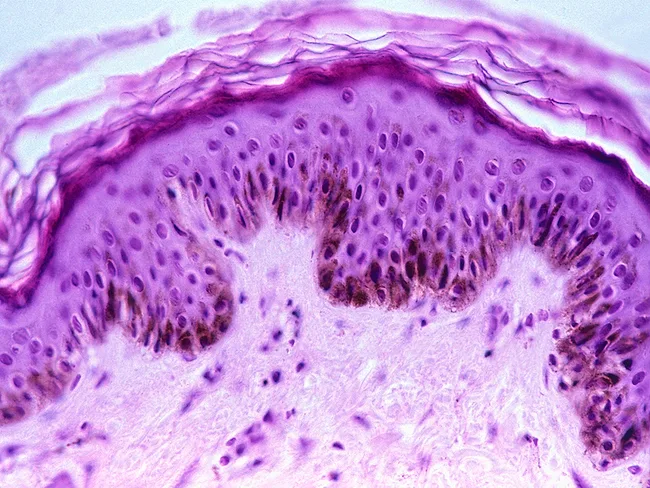
Tyrosinase (TYR) is the key enzyme in melanin synthesis because it catalyzes the first and rate-limiting step of melanin synthesis. TYR inhibitors are used clinically for hyperpigmentation, but there are few direct TYR activators for treating hypopigmentation.
Thioredoxin reductase 1 (TXNRD1) is a key component of the thioredoxin antioxidant system that helps maintain cellular redox homeostasis and regulates critical cellular processes such as proliferation, apoptosis and immune responses. A team of researchers at Central South University systematically investigated TXNRD1 expression and function in psoriatic keratinocytes using gene expression datasets, clinical samples and in vitro and in vivo models.
The Advanced Research Projects Agency for Health (ARPA-H), an agency within the U.S. Department of Health and Human Services, has announced the teams for the THRIVE (Treating Hereditary Rare diseases with In Vivo prEcision genetic medicines) program. With a commitment of up to $160 million over 5 years, THRIVE aims to accelerate solutions for rare genetic pediatric diseases across multiple technological approaches, clinical trial designs and deployment models.
Promomed Rus LLC has identified Janus kinase (JAK) inhibitors reported to be useful for the treatment of alopecia, atopic dermatitis, juvenile arthritis, rheumatoid arthritis, systemic lupus erythematosus and psoriatic arthritis.
Derm-Biome Pharmaceuticals Inc. has released promising preclinical results for its novel small molecule, DB-006, demonstrating efficacy in treating atopic dermatitis.
Avalo Therapeutics Inc. is advancing AVTX-010, a long-acting next-generation anti-IL-1β monoclonal antibody with potential for hidradenitis suppurativa and additional inflammatory disorders
Kymera Therapeutics has developed KT-579, a potent and selective IRF5 degrader as a novel approach for treating systemic lupus erythematosus (SLE) and Sjögren disease.
Systemic lupus erythematosus (SLE) is a chronic autoimmune disorder characterized by dysregulation in humoral immunity and sustained activation of B cells and autoantibody release, where BAFF (B-cell activating factor) and APRIL (a proliferation-inducing ligand) play crucial roles in B-cell differentiation and survival. Genescience Pharmaceutical Co. Ltd. has released data for its dual BAFF and APRIL inhibitor Gensci-136 for the treatment of SLE.
Cell therapy based on fibroblasts has shown promise in the treatment of psoriasis due to immune modulation capability and strong expansion when cultured. Work at Fibrobiologics Inc. has focused on the impact of culture format and donors of human dermal fibroblasts (HDFs) on the therapeutic efficacy and immune responses in murine models of psoriasis.
Recludix Pharma Inc. recently presented data on their new STAT1/3 inhibitors REX-6553 and REX-6547 for treating dermatological inflammatory skin diseases.
 RSS
RSS