Eli Lilly and Co.’s Ebglyss (lebrikizumab) becomes the latest U.S. entrant in the increasingly competitive atopic dermatitis space, following FDA approval of the IL-13-targeting antibody, which will now go up against other biologics such as established blockbuster Dupixent (dupilumab, Regeneron Pharmaceuticals Inc.), as well as more recently approved Adbry (tralokinumab, Leo Pharma Inc.).
Phagocytosis – eliminating millions of dead cells every day – requires specialized cells such as macrophages, the true professionals, which migrate to engulf waste and dying cells. But they are not the only ones that can perform this task, as scientists at Howard Hughes Medical Institute (HHMI) discovered when they investigated hair follicle stem cells (HFSCs), a tissue in constant regeneration, to clarify how dying cells are detected and cleared in the epithelium and the mesenchyme.
With favorable data from the phase III trial testing izokibep, a small protein therapeutic designed to inhibit IL-17A, in hidradenitis suppurativa (HS), Acelyrin Inc. CEO Mina Kim said the firm will “look at all the options and do what’s best for the program.” The phase III trial hit its primary endpoint of Hidradenitis Suppurativa Clinical Response 75 at 12 weeks. At the same time, the Los Angeles-based firm made known a refocused pipeline strategy that prioritizes lonigutamab in thyroid eye disease (TED) and is projected to extend its cash runway.
Aiming to offer an advantage over Dupixent (dupilumab, Regeneron Pharmaceuticals Inc.), dermatology-focused Galderma Holding SA won clearance from the U.S. FDA for Nemluvio (nemolizumab) as a prefilled pen providing a subcutaneous injection to treat adults with prurigo nodularis (PN).
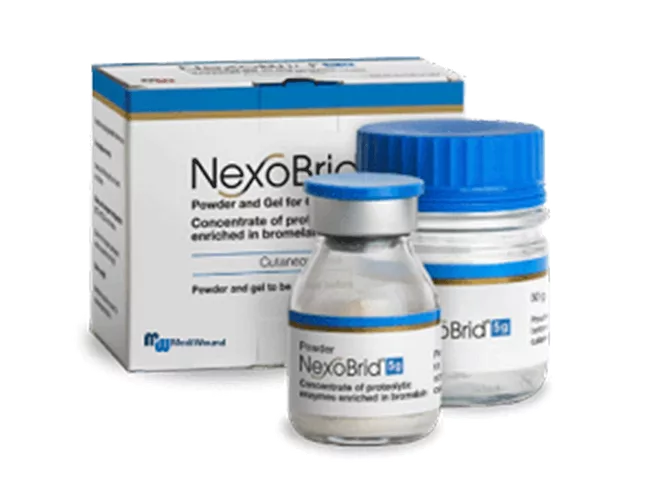
Mediwound Ltd. reported that the Nexobrid expanded treatment access protocol achieved complete debridement in 94.9% of adults and all children treated and removed all eschar within 24 hours. The results put more power behind a partnership with Vericel Corp. that introduced Nexobrid, an enzymatic debridement agent for severe thermal burns, into the U.S. in the fourth quarter of 2023 and increases the likelihood of an indication expansion into pediatrics.
Succeeding where others have failed in an indication with high unmet need, Celldex Therapeutics Inc. disclosed top-line data from the phase II trial with barzolvolimab (barzo) against two common forms of chronic inducible urticaria (CIndU): cold urticaria (ColdU) and symptomatic dermographism (SD).
Alumis Inc. began trading (NASDAQ:ALMS) earlier this morning, with the company’s IPO debuting at $16 per share to raise $210 million, with another $40 million coming through a concurrent private placement at the same price. That was the lower end of its previously announced price range, which had stretched as high as $18 per share.
The U.S. FDA has approved the NDA for Sofdra (sofpironium) for treating excessive underarm sweating from Botanix Pharmaceuticals Ltd. The approval was based on two pivotal phase III studies and is approved for those ages 9 and older.
South Korea’s Hanall Biopharma Co. Ltd., of Songpa-gu, Seoul, agreed to an exclusive licensing deal with San Francisco-based Turn Biotechnologies Inc. to develop novel ophthalmic and optic therapies using the latter’s mRNA-based technology.
Gaining full rights to a bispecific antibody to treat atopic dermatitis, Johnson & Johnson is paying $1.25 billion to acquire Yellow Jersey Therapeutics, a wholly owned subsidiary of Numab Therapeutics AG. The subsidiary houses all assets related to NM-26, which targets IL-4Ra (type I and II receptors) and IL-31, and was designed with Numab’s MATCH (Multispecific Antibody-based Therapeutics by Cognate Heterodimerization) technology platform. It is ready for phase II development for atopic dermatitis, although J&J intends to develop, manufacture and commercialize the drug globally for follow-on indications as well.
 RSS
RSS