Apogee Therapeutics Inc. recently presented preclinical data on its lead candidate, APG-777, a fully optimized and half-life extended antibody targeting IL-13 for the treatment of atopic dermatitis and asthma.
In what TD Cowen analyst Joseph Thome called an “upside surprise,” Anaptysbio Inc. reported positive top-line data from its phase III Gemini-1 study of imsidolimab, a monoclonal antibody designed to inhibit the interleukin-36 receptor, in patients with generalized pustular psoriasis (GPP), positioning the firm for a potentially productive out-licensing deal.
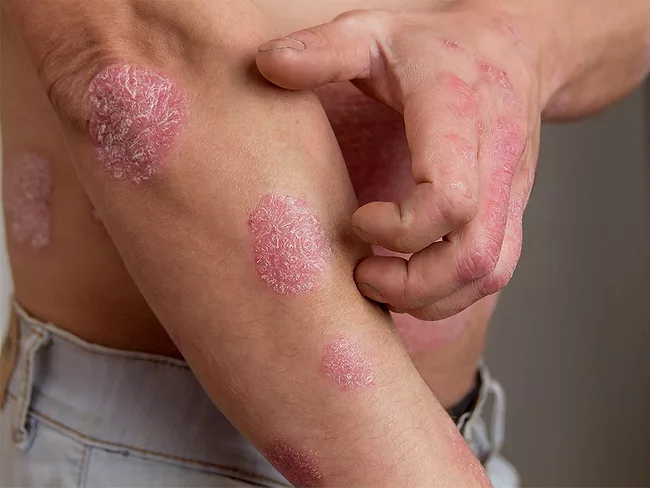
Psoriasis is an autoimmune disorder characterized by abnormal differentiation of keratinocytes and chronic inflammation where current treatments frequently are associated with severe side effects.
Leo Pharma A/S researchers have synthesized new interleukin-17 (IL-17) modulators reported to be useful for the treatment of psoriasis, psoriatic arthritis, spondyloarthritis, radiographic ankylosing spondylitis (ankylosing spondylitis) and autoimmune diseases.
Di-cyclopropyl based interleukin-17A (IL-17A) production inhibitors have been reported in a Dice Alpha Inc. patent as potentially useful for the treatment of psoriasis, radiographic axial spondyloarthritis (ankylosing spondylitis), hidradenitis suppurativa, spondyloarthritis, psoriatic and rheumatoid arthritis.
Scinai Immunotherapeutics Ltd. (formerly Biondvax Pharmaceuticals Ltd.) has released promising results from a preclinical study of Scinai’s anti‑IL‑17 nanosized VHH antibodies (NanoAbs) as a treatment for plaque psoriasis. The alpaca‑derived recombinant variable domain of heavy-chain-only antibodies are designed to be administered locally.
Acelyrin Inc.’s shares tumbled after its interleukin-17A inhibitor, izokibep, failed to reachstatistical significance in part B of a phase IIb/III trial inmoderate to severe hidradenitis suppurativa (HS), but the company remains undeterred with its plans to advance the drug for the inflammatory skin condition.
Aryl hydrocarbon receptor (AhR) is a ligand-dependent transcription factor that maintains skin homeostasis in healthy skin and is expressed in keratinocytes, fibroblasts, mastocytes and melanocytes. In inflammatory skin disorders such as psoriasis, AhR deficit leads to marked skin inflammation, abnormal barrier function and increased cytokine release. Researchers from Sichuan University have reported the discovery and optimization of a new series of 2-thioxoimidazolidin-4-one derivatives acting as AhR agonists that led to the identification of [I] as the lead compound, which showed an EC50 value of 0.015 µM against AhR.
There have been no signs of liver damage with Novartis AG’s oral Bruton’s tyrosine kinase (BTK) inhibitor remibrutinib for treating chronic spontaneous urticaria, top-line results from two phase III trials show, suggesting that faith in the faltering BTK space could be restored.
 RSS
RSS