When Nektar Therapeutics Inc. decided to push ahead with development of Treg stimulator rezpegaldesleukin (rezpeg) in atopic dermatitis despite what appeared to be middling early stage data, investors weren’t exactly jumping up and down. But it turns out those data are more promising than originally thought.
Recludix Pharma Inc. has entered into a strategic collaboration with Sanofi SA to develop and commercialize first-in-class oral small-molecule STAT6 (signal transducer and activator of transcription 6) inhibitors for patients with immunological and inflammatory diseases. STAT6 is believed to play a key role in multiple dermatological and respiratory diseases.
Heterobicyclic derivatives characterized as tyrosine-protein kinase ITK/TSK (EMT) inhibitors have been revealed in an Almirall SA patent. They are reported to be useful for the treatment of atopic dermatitis, psoriasis, T-cell lymphoma, alopecia areata and vitiligo.
Two biopharma companies entered the public markets on July 14, with Apogee Therapeutics Inc. pricing a $300 million IPO, the second largest U.S. debut this year, and Sagimet Biosciences Inc. raising $85 million. Apogee, of San Francisco, and Waltham, Mass., is advancing APG-777 and APG-808, which are in development for atopic dermatitis (AD) and chronic obstructive pulmonary disease, while San Mateo, Calif.-based Sagimet’s lead candidate is the FASN inhibitor denifanstat for nonalcoholic steatohepatitis.
Daegu-Gyeongbuk Medical Innovation Foundation and Seoul National University Hospital have jointly developed adiponectin-derived peptoid derivatives reported to be useful for the treatment of skin inflammation, wound infection, alopecia, fibrosis, aging, skin wrinkling, cancer and metabolic diseases, among others.
Interleukin-17 (IL-17), a cytokine produced by T helper 17 (Th17) cells, is a key player in host inflammation and immune dysfunction leading to autoimmune diseases such as psoriasis, rheumatoid arthritis, multiple sclerosis or asthma, among others.
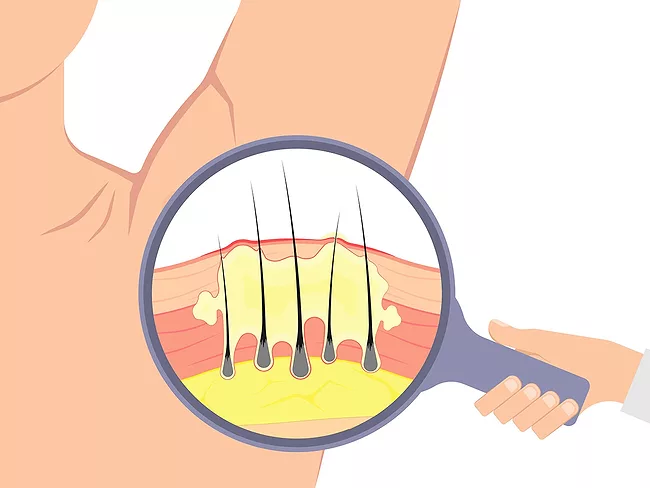
Less than a week after Eli Lilly and Co.’s $2.4 billion, IL-17-based buyout of Dice Therapeutics Inc., Moonlake Immunotherapeutics Inc. offered more news in the space by way of data from the global phase II trial called Mira evaluating the efficacy and safety of the Nanobody sonelokimab in moderate to severe hidradenitis suppurativa (HS).
 RSS
RSS