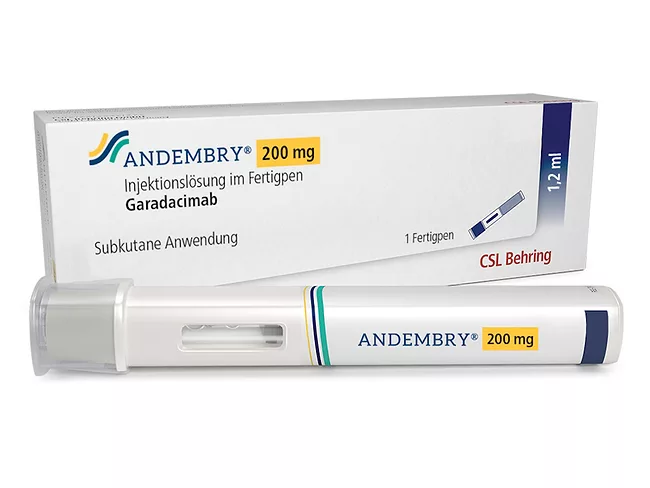
Following a complete response letter issued last October over CMC issues, CSL Behring LLC gained U.S. FDA approval June 16 of its humanized anti-factor XIIa monoclonal antibody, garadacimab (CSL-312), to prevent hereditary angioedema attacks.
At the ongoing International Society for Stem Cell Research meeting, Chinese researchers reported they demonstrated that SPT6 homolog, histone chaperone and transcription elongation factor (SPT6) promotes epidermal stem/progenitor cells differentiation by facilitating transcriptional elongation, but its role in vivo in skin homeostasis is not well defined.
Deepcure Inc. has nominated DC-15442, an oral selective STAT6 inhibitor, as its second development candidate. DC-15442 is designed to replicate the safety and efficacy of dupilumab, while offering an oral alternative to regular subcutaneous injections.
Ascletis Pharma Inc.’s once-daily oral fatty acid synthase inhibitor, denifanstat, demonstrated statistically significant and clinically meaningful improvements compared to placebo, meeting all primary and secondary endpoints in a phase III trial for moderate to severe acne vulgaris.
Alys Pharmaceuticals Inc. has submitted a clinical trial application (CTA) to Germany’s Paul-Ehrlich-Institut (PEI) to initiate a phase I/Ib study of ALY-301 in healthy volunteers and patients with cold urticaria, a subtype of chronic inducible urticaria.
Biogen Inc. has disclosed non-receptor tyrosine-protein kinase TYK2 inhibitors reported to be useful for the treatment of stroke, psoriasis, arthritis, pain, silicosis, alopecia and more.
Aqilion AB has released promising results from new studies with molecules from the company’s lead series within the TAK1 program, demonstrating a strong disease-modifying effect in a well-established model of skin inflammation.
Ascletis Pharma Inc.’s once-daily oral fatty acid synthase inhibitor, denifanstat, demonstrated statistically significant and clinically meaningful improvements compared to placebo, meeting all primary and secondary endpoints in a phase III trial for moderate to severe acne vulgaris.
Sanofi SA has exercised its option to exclusively license Nurix Therapeutics Inc.’s STAT6 program, including the drug development candidate NX-3911, an oral, highly selective STAT6 degrader.
Recludix Pharma Inc. has nominated a lead development candidate, REX-8756, an oral, selective and reversible small-molecule inhibitor of STAT6, and completed GLP toxicology studies for the compound. REX-8756 has potential for patients with type 2 immune-related inflammatory diseases.
 RSS
RSS