Roche Holdings AG received CE mark for its artificial intelligence (AI)-enabled continuous glucose monitoring (CGM) system, Accu-Chek Smartguide. The company said the solution addresses the unmet need around diabetes management and glycemic control as it offers critical predictions to people living with type 1 and type 2 diabetes.
Nearly 80% of people in Australia and the U.S. that used Genetic Technologies Ltd.’s Genetype multi-risk assessment test showed an elevated risk for at least one disease covered by the test.
Continuous glucose monitors continue to post positive results for managing diabetes in an ever-expanding population. Long a mainstay of disease management for those with type 1 diabetes, the devices have also proved themselves in treating type 2 diabetes that requires multiple daily injections of insulin.
All eyes were on Tandem Diabetes Care Inc.’s presentation of the tiny Mobi pump at a standing-room-only event during the American Diabetes Association’s 84th Scientific Sessions in Orlando. In addition to showcasing the 18 ways the device can be worn, Tandem highlighted results from its user survey which found that 86% of respondents reported that the device improved their quality of life.
Endogenex Inc. closed an oversubscribed $88 million series C financing round to support completion of its investigational device exemption trial for the Recet system. The Recet system uses non-thermal pulsed electric fields to remodel the duodenal tissue to treat adults with type 2 diabetes.
Sava Technologies Ltd. emerged from five years of stealth with $8 million in seed funding for its microneedle-based sensor. The financing round was led by Balderton Capital and Exor Ventures and will be used to expand the company’s team, design the next-generation product and conduct clinical studies.
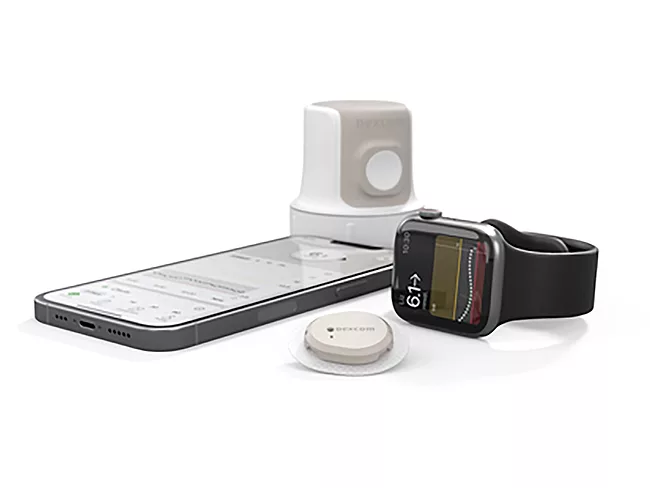
Dexcom Inc. and Insulet Corp. both reported introductions of their products into new countries on the eve of the 2024 American Diabetes Association annual meeting in Orlando, Fla. The two firms also announced the U.S. launch of Insulet’s Omnipod 5 tubeless automated insulin delivery system with connectivity to Dexcom’s G7, the company’s latest generation continuous glucose monitor.
Hagar Non-invasive Glucose Monitoring Ltd.’s non-invasive radiofrequency (RF) glucose monitor, Gwave, demonstrated high concordance with both venous and capillary glucose measurements in a study published in Diabetes Technology & Therapeutics.
Focused on oral therapies for obesity, diabetes and rare diseases, Boston-based Syntis Bio Inc., which raised $15.5 million through seed funding last year, emerged from stealth to advance its synthetic tissue-lining technology and a pipeline of candidates.
Abbott Laboratories received U.S. FDA clearance for its Lingo and Libre Rio over-the-counter continuous glucose monitoring systems, enabling it to challenge Dexcom Inc. in this rapidly growing market. Dexcom received FDA clearance for its OTC Stela continuous glucose monitor in March.
 RSS
RSS