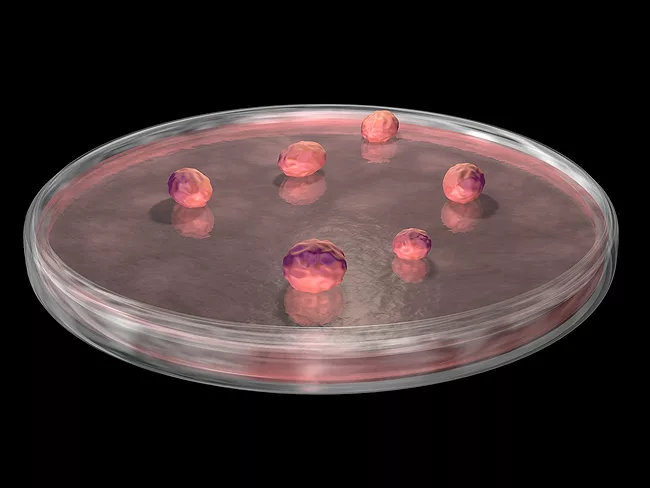
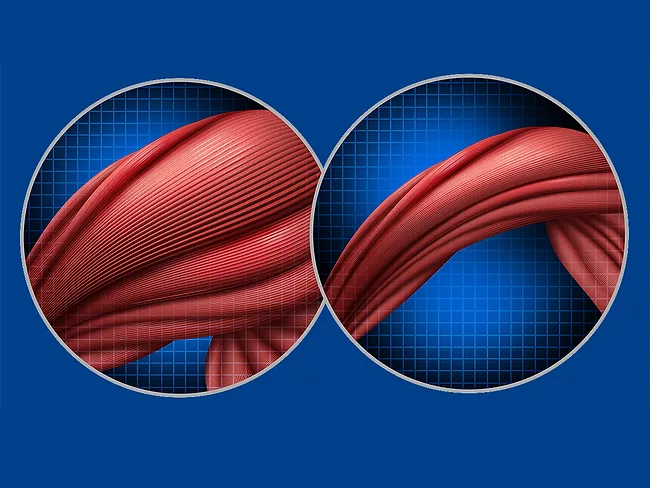
The variety of organoids that can be developed in vitro is enabling major advances. Depending on the type of tissues and the research goals, these small 3D cell-based structures that mimic real tissue offer certain advantages over animal models. Scientists at the University of Padova in Italy have created human neuromuscular organoids to reproduce cancer-induced muscle cachexia, a condition that murine models do not accurately replicate.
Nanjing Anji Biotechnology Co. Ltd. has patented micropeptides regulating cholesterol metabolism and thus reported to be useful for the treatment of obesity, atherosclerosis, age-related macular degeneration, hyperlipidemia, fatty liver, liver fibrosis, liver cancer and coronary heart disease, among others.
Hunter syndrome, also called mucopolysaccharidosis II, is an X-linked genetic lysosomal disorder caused by loss-of-function mutations in the IDS gene, encoding iduronate-2-sulfatase (I2S). I2S is a lysosomal enzyme responsible for the cleavage of glycosaminoglycans (GAGs), and its deficiency results in accumulation of GAGs leading to a multisystemic disorder.
CSPC Pharmaceutical Group Ltd. has obtained IND approval from the FDA for SYH-2082 injection, a GLP-1/GIP receptor dual-biased agonist polypeptide long-acting injection for weight management for individuals with obesity or overweight and at least one weight-related comorbidity.
A circuit formed by tumor, immune and nervous systems triggers cancer cachexia and anorexia, the excessive loss of weight, muscle and fat experienced in some cancer types. A new study is the first showing these three actors of a triangle interaction that initiates and feeds the process.
The farnesoid X receptor (FXR) is a nuclear receptor predominantly expressed in the liver, intestine and kidney. FXR is crucially involved in regulating bile acid homeostasis, controlling inflammatory responses in the liver, and regulating lipid and glucose metabolism. Therefore, FXR plays a role in regulating metabolic dysfunction-associated steatohepatitis (MASH) and has been proposed as a promising target for MASH drug development.
The malfunction of lymphatic drainage that occurs in lymphedema leads to excessive cholesterol accumulation in the affected skin and lymphatic vessels, causing inflammation and fibrosis. However, surgery and the chemical reduction of accumulated cholesterol with cyclodextrin reduce inflammation and regenerate lymphatic vessels. Cholesterol is a potential therapeutic target for treating lymphedema, according to this study published on Feb. 11, 2026, in Nature by Veronique Angeli and her colleagues.
Madrigal Pharmaceuticals Inc. has signed an exclusive global license agreement with Suzhou Ribo Life Science Co. Ltd. and its subsidiary Ribocure Pharmaceuticals AB for six preclinical small interfering RNA (siRNA) programs.
Venenum Biodesign LLC has reported new substituted phenylsulfonamides acting as 2-acylglycerol O-acyltransferase 2 (MOGAT2) inhibitors described as potentially useful for the treatment of metabolic dysfunction-associated steatotic liver disease (MASLD; NAFLD) and obesity.
Shenzhen Salubris Pharmaceuticals Co. Ltd. has discovered new proprotein convertase subtilisin/kexin-type 9 (PCSK9) and 3-hydroxy-3-methylglutaryl-coenzyme A (HMG-CoA) reductase dual inhibitors. They are described as potentially useful for the treatment of hypercholesterolemia.
 RSS
RSS