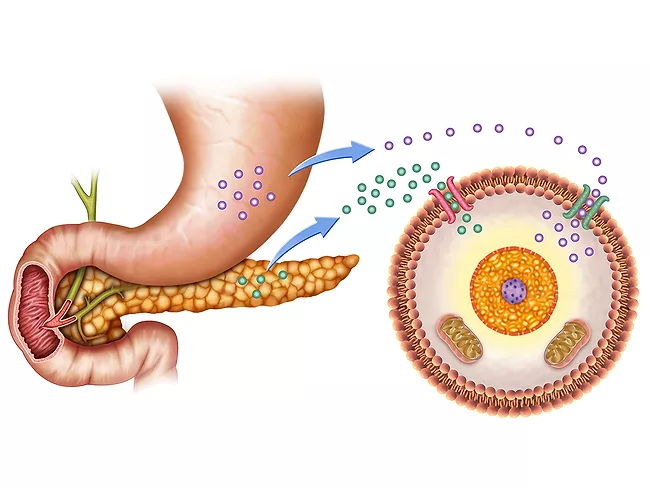
Urocortin-2 (UCN2) is a selective corticotropin-releasing factor CRF2 receptor (CRFR2) agonist, which has been previously shown to reduce fat mass while promoting muscle hypertrophy. Hanmi Pharmaceutical Co. Ltd. presented the discovery and preclinical characterization of a novel CRFR2-selective UCN2 analogue, HM-17321, being developed for the treatment of obesity.
Startup company Pep2tango Therapeutics Inc., unveiled with backing by Versant Ventures, is advancing unimolecular multireceptor peptide agonists that target GLP-1, GIP, amylin and calcitonin receptors.
Fat cells from patients who had lost weight after bariatric surgery, as well as from animals who had gained and then lost weight, were transcriptionally distinct from cells that had not experienced such weight changes at the organism level. In the animal studies, those transcriptional changes were due to epigenetic changes. The findings, which were published online in Nature on Nov. 18, 2024, are a possible molecular-level explanation for the short-term nature of most weight loss.
Astrazeneca plc has selected a candidate to progress under its type 1 diabetes regulatory T cell (Treg) therapy program with Quell Therapeutics Ltd. The company has exercised its exclusive option to license the therapy for further development and commercialization, resulting in a milestone payment to Quell of $10 million.
While women make up half the world’s population and own two out of every five businesses, there are substantial knowledge gaps about conditions affecting their health – mostly due to decades of research excluding women from clinical trials and investment decisions.
It’s difficult to fathom that the health of half the world’s population is underserved. But it’s a hard truth. There are many conditions that disproportionately impact women. Other conditions and diseases affect women in different ways than men. Decades of research excluding women from clinical trials and investment decisions in male-dominated board rooms have ignored these facts. Though an increasing number of women are now managing investments and driving the research, it’s all still woefully behind. In BioWorld’s new report, Healing the health divide, we’ve highlighted the disparities.
Youngene Therapeutics Co. Ltd. has divulged glucagon-like peptide 1 receptor (GLP-1R) agonists reported to be useful for the treatment of type 2 diabetes, obesity, prediabetes, metabolic syndrome, stroke, metabolic dysfunction-associated steatohepatitis, cardiovascular and renal disorders, among others.
Primary aldosteronism (PA), caused by bilateral adrenal hyperplasia or aldosteronomas, is the leading cause of endocrine hypertension, with an estimated prevalence of 10%-20% in patients in tertiary hospitals.

 RSS
RSS