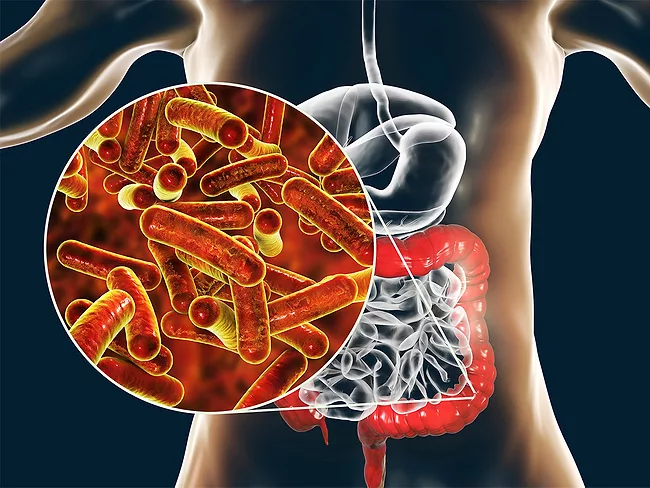
Snipr Biome ApS has received funding from the Bill & Melinda Gates Foundation to develop a microbiome-directed intervention designed to improve environmental enteric dysfunction by reducing gut entero-pathogen burden in pregnant women from low- and middle-income countries.
Shigella flexneri is the leading cause of endemic diarrhea and dysentery in some countries with low-to-middle incomes. There is still a lack of a licensed vaccine against this pathogen.
Monte Rosa Therapeutics Inc. has submitted an IND application to the FDA for MRT-6160, a highly selective and orally bioavailable molecular glue degrader directed against VAV1 in development for systemic and neurological autoimmune diseases.
Resolution Therapeutics Ltd. has received approval from the U.K. Medicines and Healthcare products Regulatory Agency (MHRA) to initiate a phase I/II study of its lead candidate RTX-001 in patients with decompensated liver cirrhosis.
A recent paper has identified the enhancer ETS2, located in a so-called gene desert, as a contributor to five separate immune disorders. It also showed that one of ETS2’s target genes mediating this inflammation was the eminently druggable MEK, a kinase that is the target of the FDA-approved inhibitors Mekinist (trametinib, GSK plc), Mektovi (binimetinib, Array Biopharma Inc.), Cotellic (cobimetinib, Roche Holding AG) and Koselugo (selumetinib, Astrazeneca plc/Merck & Co. Inc.).
Ose Immunotherapeutics SA has presented preclinical data on its mRNA therapeutic platform for the treatment of inflammatory and autoimmune disorders. The platform has been designed for the local delivery of mRNA into inflammatory tissue using lipid nanoparticles (LNPs). Interleukin-35 (IL-35) has been shown in preclinical studies to have a key role in controlling several immune-related disorders, including autoimmune diseases.
The search for an effective therapy for liver fibrosis continues. A recent study by researchers at Medical University of South Carolina and collaborators explored the potential of a new compound, LP-340, as a treatment for liver fibrosis.
Enveda Biosciences (Enveda Therapeutics Inc.) has announced a new series B2 financing round of $55 million. The drug discovery and development company uses artificial intelligence (AI)-powered technologies to translate nature into new medicines.
Abbvie Inc. and Futuregen Biopharmaceutical (Beijing) Co. Ltd. have signed a license agreement to develop FG-M701, a next-generation TL1A antibody for the treatment of inflammatory bowel disease.
F. Hoffmann-La Roche Ltd. and Hoffmann-La Roche Inc. have described hypoxia inducible factor-2α (HIF-2α; EPAS1) inhibitors reported to be useful for treatment of ulcerative colitis and Crohn’s disease.
 RSS
RSS