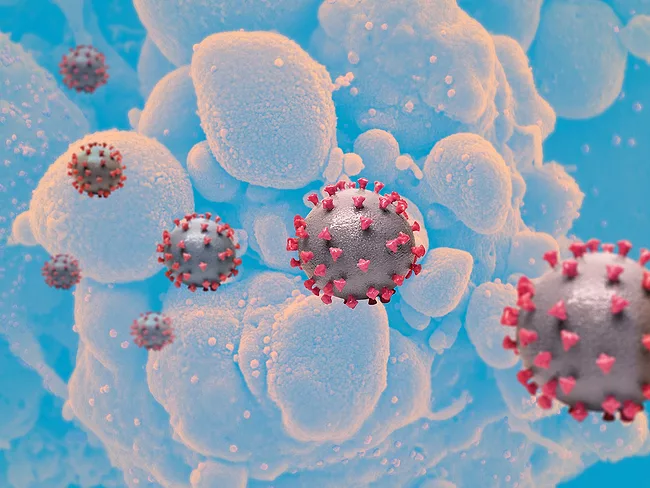
Imunon Inc. has released promising results from a live virus challenge study conducted by the Wistar Institute with IMNN-101 against the SARS-CoV-2 variant XBB.1.5. This study was conducted using the clinical vector that Imunon intends to bring into its phase I study during the second quarter, and showed IMNN-101 immunogenicity and protective activity in a live viral mouse challenge.
Avitar Biosciences Inc. has divulged 3C-like proteinase (3CLpro; Mpro; nsp5) (SARS-CoV-2; COVID-19 virus) inhibitors reported to be useful for the treatment of SARS-CoV-2 infection (COVID-19).
Combating Antibiotic-Resistant Bacteria Biopharmaceutical Accelerator (CARB-X) is awarding Glyprovac LLC US$467,000 to develop a maternal vaccine that targets Escherichia coli, a bacterial species responsible for a large portion of neonatal sepsis infections.
Dyadic International Inc.'s Dutch subsidiary, Dyadic Nederland BV, has entered into a strategic partnership agreement and collaboration with Rabian BV to develop efficacious, scalable, and affordable rabies prophylactics and vaccines utilizing Dyadic's C1 protein production platform.
Blacksmith Medicines Inc. has disclosed UDP-3-O-(R-3-hydroxymyristoyl)-N-acetylglucosamine deacetylase (LpxC) (bacterial) inhibitors reported to be useful for the treatment of Pseudomonas aeruginosa infection.
Baseimmune Ltd. has closed $11.3 million (£9 million) in series A funding. The company uses proprietary, deep learning artificial intelligence (AI) to predict future pathogen mutations to generate novel vaccines.
Researchers from Contrafect Corp. have reported on the bactericidal activity of CF-370, a novel engineered lysin with broad-spectrum activity against gram-negative organisms, which are usually more resistant to antibacterial agents than gram-positive bacteria.
Researchers from the Peking University Health Science Center have developed a murine model of RSV infection based on the knockout of the Rag2 gene using CRISPR/Cas9 (Rag2-/- mice).
Mice are frequently used as models to test novel candidate compounds during drug discovery and development. However, many compounds show efficacy against the drug target in vitro but present poor pharmacokinetic properties in mice due to the high metabolism rates.
Researchers from the University of Illinois at Chicago and Harvard University have published details on the chemical synthesis and microbiological evaluation of a ribosome-binding antibiotic – cresomycin (CRM) – that was able to overcome antimicrobial resistance of major pathogenic bacteria including Escherichia coli, Staphylococcus aureus, Pseudomonas aeruginosa and others.
 RSS
RSS