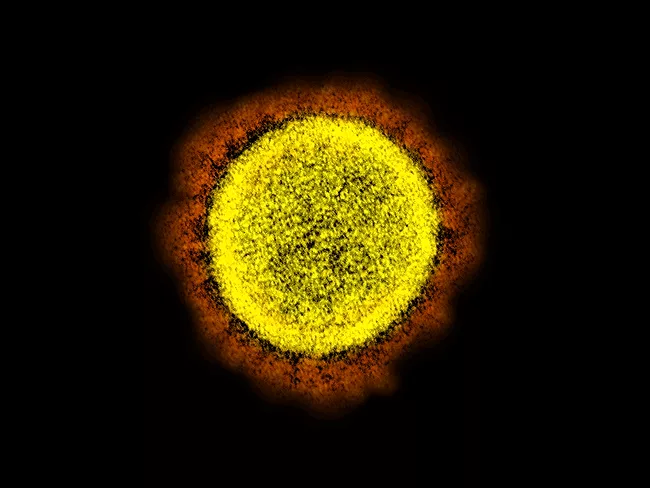
Trawsfynydd Therapeutics Inc. has received approval to initiate a first-in-man phase I trial of the novel best-in-class COVID-19 treatment, TRX-01, an inhibitor targeting the SARS-CoV-2 viral main protease (3CL, Mpro).
Aatec Medical GmbH has announced the start of its collaboration with the German Federal Agency for Disruptive Innovations (SPRIND), which will help advance the preclinical development of ATL-105.
Aligos Therapeutics Inc. and Katholieke Universiteit Leuven have jointly patented 3C-like proteinase (3CLpro; Mpro; nsp5) (SARS-CoV-2; COVID-19 virus) inhibitors for the treatment of SARS-CoV-2 infection (COVID-19), middle East respiratory syndrome coronavirus (MERS-CoV) infection, norovirus and rhinovirus infections.
Chongqing Fuan Pharmaceutical (Group) Co. Ltd. has prepared and tested class of 7-((5-membered heterocyclic)methyl)-8-carboxylic acid-benzo cyclic borate derivatives reported to be useful for the treatment of bacterial infections.
A common molecular pathway associated with lung fibrosis may also hold the key to pulmonary vascular repair. A group of scientists at the University of Pennsylvania (Penn) found that when a viral infection damaged these vessels, the injury could be restored by activating the transforming growth factor-β receptor 2 (TGF-βR2) in endothelial cells, which led to cell proliferation.
COVID-19 severity remains open to several questions. Researchers at the University of California Los Angeles (UCLA) have revealed how SARS-CoV-2 causes acute inflammation instead of the symptoms of a common cold. This effect could be initiated by the peptide fragments of the coronavirus released when the host eliminates the virus, which can form pro-inflammatory complexes that trigger an amplified immune response.
Bone morphogenetic protein 9 (BMP-9), also known as growth/differentiation factor 2, is a member of the transforming growth factor-β family of cytokines, which exerts its biological effects through binding to a complex formed by ALK1 and BMPR2.
Neutrophils are the immune system’s most abundant effector cells, which play a defensive role of host cells and clear pathogens by phagocytosis, degranulation and neutrophil extracellular trap (NET) release.
Bioversys AG has divulged compounds with the ability to interact with accessory gene regulator A (AgrA) and inhibit the expression of AgrA-regulated virulence factors.
 RSS
RSS