Because of increasing resistance to current antimalarial drugs, new agents with novel mechanisms of action are needed. Plasmepsins are a family of 10 Plasmodium falciparum aspartic proteases (PMI to PMX), among which plasmepsins IX and X (PMIX and PMX) have been identified as potential targets due to their involvement in egress, invasion and parasite development.
The U.S. biopharma and med-tech industries are adding their voice to that of Gilead Sciences Inc. in urging the California Supreme Court to review the Gilead Tenofovir Cases, which seek to hold the drug company liable for how and when it developed its pipeline of HIV drugs.
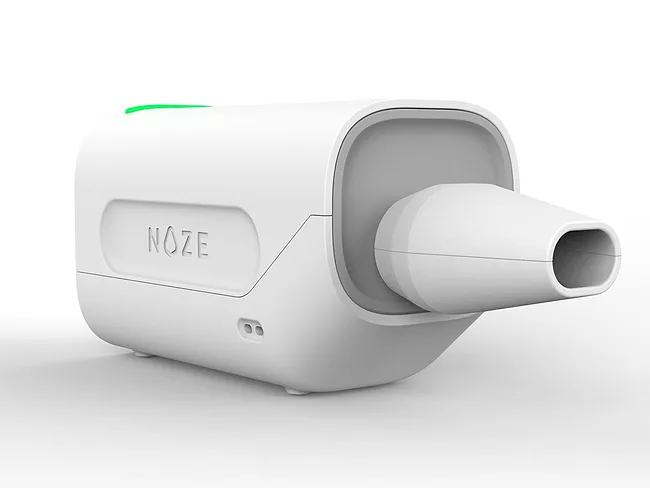
Noze Inc. is hot on the trail of tuberculosis with its Diagnoze hand-held system that can detect the disease by its smell. The company, formerly known as Stratuscent, received additional support from the Bill & Melinda Gates Foundation to fund a study evaluating a breathalyzer designed to detect tuberculosis in high-burden countries.
The EMA’s Committee for Medicinal Products for Human Use (CHMP) adopted a positive opinion recommending approval of Pfizer Inc.’s Emblaveo (aztreonam-avibactam), an antibiotic combination that would offer a new option to patients with serious bacterial infections caused by multidrug-resistant gram-negative bacteria.
Assembly Biosciences Inc. has disclosed bicyclic heterocycle compounds reported to be useful for the treatment of cytomegalovirus (CMV) and herpes simplex virus (HSV) infections.
While there has been progress in the development and availability of treatments and vaccines for Ebola virus (EBOV), there are still no treatments for other filoviruses such as Sudan virus (SUDV, species Sudan ebolavirus), which caused the 2022-23 outbreak in Uganda.
The U.S. FDA granted emergency use authorization (EUA) on March 22 for Waltham, Mass.-based Invivyd Inc.’s half-life extended monoclonal antibody (MAb) VYD-222 – making it available to prevent COVID-19 in immunocompromised adults and adolescents – but its use comes with a boxed warning for anaphylaxis.
The US Department of Veterans Affairs has synthesized substituted aminopiperazine compounds reported to be useful for the treatment of bacterial and fungal infections.
The EMA’s Committee for Medicinal Products for Human Use (CHMP) adopted a positive opinion recommending approval of Pfizer Inc.’s Emblaveo (aztreonam-avibactam), an antibiotic combination that would offer a new option to patients with serious bacterial infections caused by multidrug-resistant gram-negative bacteria. If approved, Emblaveo would be among the first beta-lactam/beta-lactamase inhibitor combos cleared for use in Europe.
Scientists at Fujifilm Corp. and Osaka University have described piperazine derivatives acting as drug efflux pump inhibitors reported to be useful for the treatment of bacterial infections.
 RSS
RSS