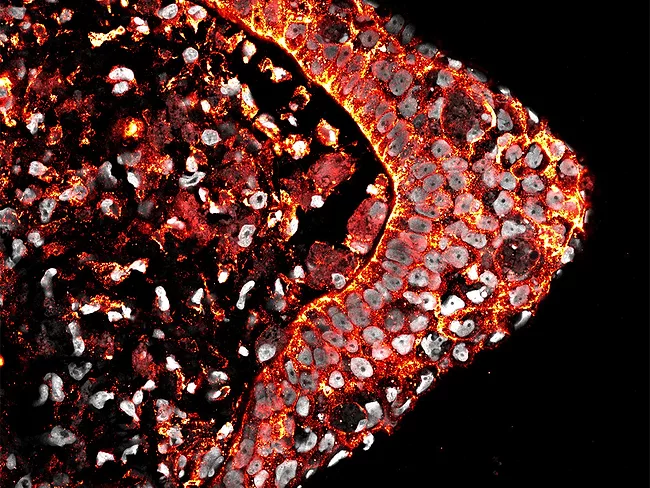
A new strategy aims to improve gene therapy for Pompe disease by optimizing both the genetic component that restores the function of a deficient lysosomal enzyme and the vector that delivers it to the target tissue while avoiding the liver. The findings suggest that combining an optimized transgene with a targeted capsid could significantly enhance the effectiveness of gene therapy for Pompe disease.
Showing a significant efficacy signal in a phase II trial, Relay Therapeutics Inc.’s zovegalisib (RLY-2608) achieved a 60% volumetric response in patients with PIK3CA-driven vascular anomalies (VAs). The isoform-selective PI3Ka inhibitor is in late-stage clinical trials with various combinations for P13Ka-mutated, HR+/HER2- advanced breast cancer, with VAs representing a second indication for which Leerink Partners analyst Andrew Berens forecasts $2.8 billion in peak revenues.
How the U.S. FDA might view the latest Duchenne muscular dystrophy (DMD) phase III data with gene therapy RGX-202 became the question for Regenxbio Inc., shares of which (NASDAQ:RGNX) closed May 14 at $6.25, down 38%, or $3.80, after the results were made public.
A lower-than-expected increase in dystrophin over baseline in the first and lowest-dose cohort of a phase I/II study of ENTR-601-44 in Duchenne muscular dystrophy (DMD) caused shares of Entrada Therapeutics Inc. to plunge more than 57%, despite the cohort meeting the safety and tolerability primary objective.
Italian family-owned Angelini Pharma SpA is making its first move into the U.S. market, acquiring rare diseases specialist Catalyst Pharma Inc. in an all-cash deal worth $4.1 billion. The acquisition gives Angelini ownership of three marketed drugs for treating epilepsy and neuromuscular diseases that had combined sales of $589 million in 2025, a 19.8% increase over 2024.
Star Sports Medicine Co. Ltd. debuted on the Hong Kong Stock Exchange with an HK$829.55 million (US$105.86 million) IPO May 5, with shares closing about 118% higher on the first day.
Roche Holding AG is making good on its promise to try and convince the EMA of the benefits of Elevidys (delandistrogene moxeparvovec), announcing a further global phase III trial of the Duchenne muscular dystrophy gene therapy.
The loss of regenerative capacity in mammals over the course of evolution may be linked to certain environmental conditions rather than to a genetic limitation. Tissue stiffness around an amputated area, oxygen availability, or epigenetic regulation could determine this ability, according to two simultaneously published but independent studies published in Science, as reported by BioWorld yesterday.
The loss of regenerative capacity in mammals over the course of evolution may be linked to certain environmental conditions rather than to a genetic limitation. Tissue stiffness around an amputated area, oxygen availability, or epigenetic regulation could determine this ability, according to two simultaneously published but independent studies published in Science today.
Phase II data disclosed March 31 by Pepgen Inc. in myotonic dystrophy type 1 (DM1) hobbled the stock but might have been much different if not for one outlier in the 5-mg/kg multiple ascending dose cohort of the ongoing phase II Freedom2-DM1 trial – and Wall Street is pondering what the hitch means for the Boston-based firm as well as the competitive space.
 RSS
RSS