Arthrogryposis multiplex congenita (AMC) is a group of disorders defined by two or more contractures in different body areas; while genes encoding sarcomeric proteins are usually involved in its pathogenesis, the role of the dystrophin complex is not well studied in AMC. Utrophin, encoded by the UTRN gene, is an important fetal dystrophin homologue and was the focus of a recently presented study.
Applied Biologics LLC has initiated a preclinical research program focused on osteoarthritis and other degenerative diseases. The program marks an expansion of the company’s research and development efforts beyond chronic wounds.
Edgewise Therapeutics Inc. is pulling in $1.55 billion up front by selling its muscular dystrophy business, including its fast skeletal myosin inhibitor, sevasemten (EDG-5506), to Servier SA. The deal is potentially worth up to $2.65 billion when including a potential $1.1 billion in milestone payments.
A new strategy aims to improve gene therapy for Pompe disease by optimizing both the genetic component that restores the function of a deficient lysosomal enzyme and the vector that delivers it to the target tissue while avoiding the liver. The findings suggest that combining an optimized transgene with a targeted capsid could significantly enhance the effectiveness of gene therapy for Pompe disease.
Showing a significant efficacy signal in a phase II trial, Relay Therapeutics Inc.’s zovegalisib (RLY-2608) achieved a 60% volumetric response in patients with PIK3CA-driven vascular anomalies (VAs). The isoform-selective PI3Ka inhibitor is in late-stage clinical trials with various combinations for P13Ka-mutated, HR+/HER2- advanced breast cancer, with VAs representing a second indication for which Leerink Partners analyst Andrew Berens forecasts $2.8 billion in peak revenues.
How the U.S. FDA might view the latest Duchenne muscular dystrophy (DMD) phase III data with gene therapy RGX-202 became the question for Regenxbio Inc., shares of which (NASDAQ:RGNX) closed May 14 at $6.25, down 38%, or $3.80, after the results were made public.
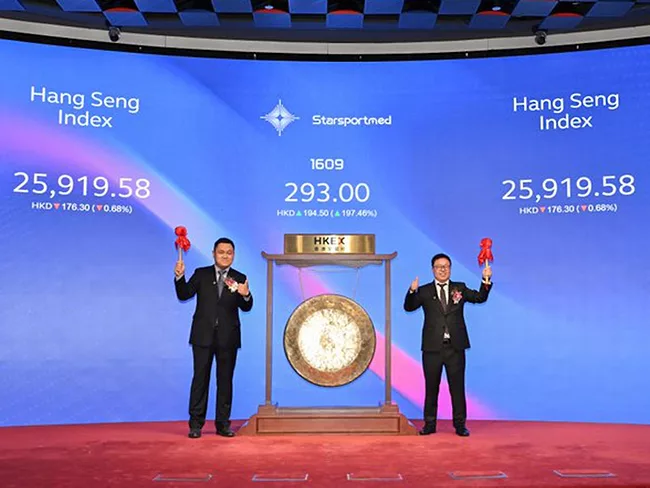
Star Sports Medicine Co. Ltd. debuted on the Hong Kong Stock Exchange with an HK$829.55 million (US$105.86 million) IPO May 5, with shares closing about 118% higher on the first day.
At the European Congress of Endocrinology in Prague, researchers from Juvena Therapeutics Inc. presented the effects of JUV-161, a fusion protein consisting of human insulin-like growth factor 2 linked to human serum albumin, in preclinical models of myotonic dystrophy type 1 (DM1) and sarcopenia.
Researchers from Rottapharm Biotech Srl have reported preclinical efficacy data on CR-10049, a long-acting osteoarthritis-targeted multikinase inhibitor, designed to treat both osteoarthritis pain and inflammatory joint degeneration.
A lower-than-expected increase in dystrophin over baseline in the first and lowest-dose cohort of a phase I/II study of ENTR-601-44 in Duchenne muscular dystrophy (DMD) caused shares of Entrada Therapeutics Inc. to plunge more than 57%, despite the cohort meeting the safety and tolerability primary objective.

 RSS
RSS