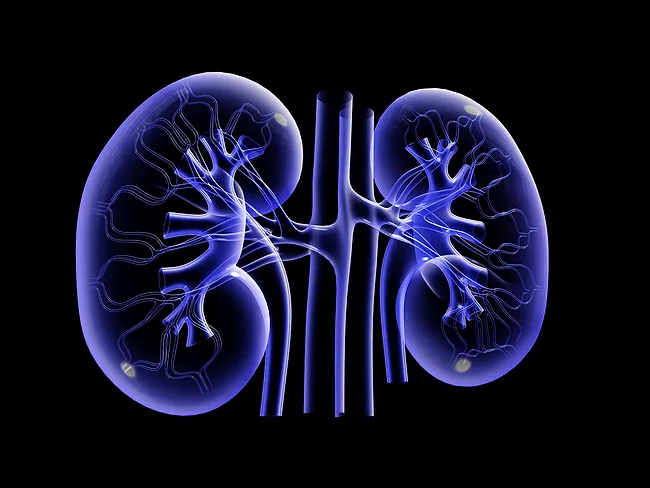
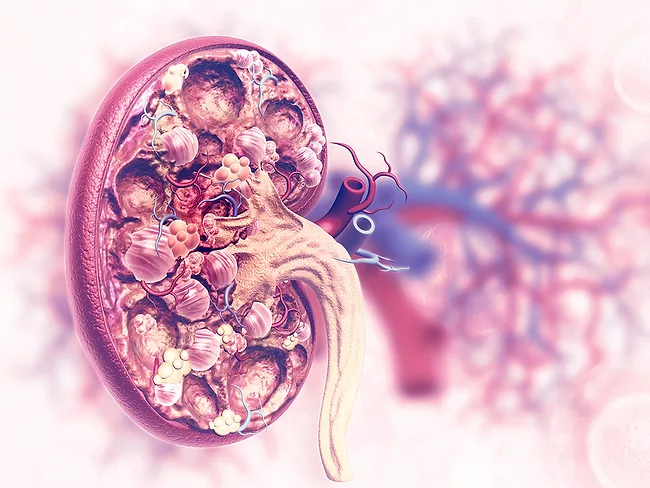
A team at the University of California, Los Angeles (UCLA) found that injured kidneys produce ectonucleotide pyrophosphatase/phosphodiesterase family member 1 (ENPP1), a protein that hydrolyzes extracellular ATP into AMP and pyrophosphate, and that impedes tissue repair.
Genescience Pharmaceuticals Co. Ltd. has been developing an SLC6A19 inhibitor – Gensci-144 – for the potential treatment of chronic kidney disease (CKD).
Integrin alpha-5 (ITGA5) is a central modulator of extracellular matrix signaling and has been tied to fibrosis and tissue damage, contributing to lupus nephritis (LN) pathogenesis. A group of researchers aimed to investigate the association between ITGA5 and LN and its inhibition as a potential strategy to improve renal outcomes.
Once again, Eli Lilly and Co. has signed a billion-dollar deal, this time with Boston-based Ascidian Therapeutics Inc., a company that is barely four years old and one that is focused on treating human diseases by rewriting RNA. “Our technology, we call it RNA exon editing,” said Ascidian Chief Scientific Officer Robert Bell. “It edits RNA, not DNA … but it does so at the kilobase scale.”
Less than two months after winning FDA approval for a second indication for Filspari (sparsentan), Travere Therapeutics Inc. added to its rare kidney disease pipeline by exclusively licensing civorebrutinib from Everest Medicines Ltd. in a deal that could be worth more than $1.14 billion.
X-linked Alport syndrome is an inherited kidney disease caused by pathogenic mutations in the COL4A5 gene. Patients develop hematuria, proteinuria and kidney function decline leading to end-stage renal disease. Nionyx Bio Inc. has developed ONYX-101, a novel kidney-targeting therapeutic designed to ensure durable COL4A5 restoration through dual-vector AAV delivery using NYX capsids that were optimized for kidney targeting.
Etherna Immunotherapies NV has reported a milestone in its ongoing partnership with Dropshot Therapeutics Inc. Based on Etherna’s nucleic acid and lipid nanoparticle (LNP) capabilities, Dropshot has elected to advance one of its selected targets in renal disease to the clinical stage.
A Convalife Pharmaceuticals Co. Ltd. and Zhejiang Convalife Pharmaceutical Co. Ltd. patent describes new complement factor B (CFB) inhibitors potentially useful for the treatment of IgA nephropathy, paroxysmal nocturnal hemoglobinuria, atypical hemolytic uremic syndrome, age-related macular degeneration, cardiovascular disorder and cancer.
Small noncoding RNAs (sncRNAs), including miRNAs, piRNAs and snoRNAs, can provide further biological insights into the mechanisms of chronic kidney disease (CKD) in diabetes. Researchers from Leiden University Medical Center and collaborating institutions previously discovered that various classes of circulating sncRNAs are associated with kidney function (eGFR, uACR) and prevalent diabetic CKD.
Acute kidney injury (AKI), although sometimes reversible, is associated with an increased risk of chronic kidney disease (CKD) and progression to end-stage renal disease (ESRD). Reactive oxygen species (ROS) contribute to maladaptive repair and progression to CKD.
 RSS
RSS