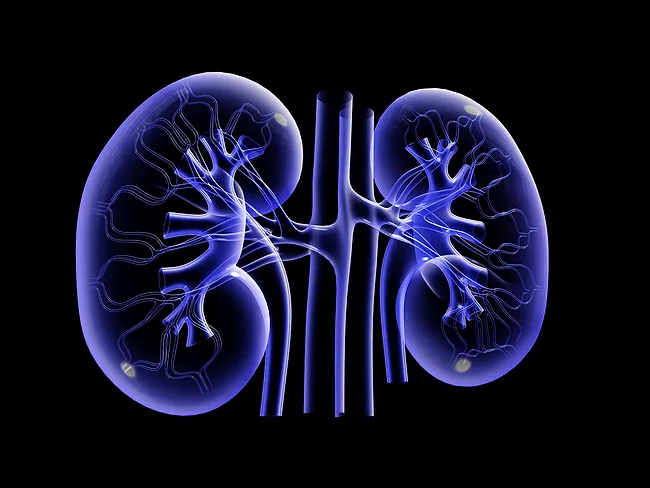
Eli Lilly & Co. has synthesized relaxin receptor 1 (RXFP1; LGR7) agonists reported to be useful for the treatment of pulmonary hypertension, chronic obstructive pulmonary disease, acute kidney disease, chronic kidney disease, diabetic nephropathy and cardiovascular disorders, among others.
The priority BLA from Otsuka Pharmaceutical Co. Ltd., of Tokyo, and its U.S. subsidiary, Otsuka Pharmaceutical Development & Commercialization Inc., for sibeprenlimab to treat immunoglobulin A nephropathy (IgAN) has received accelerated approved by the U.S. FDA.
By transplanting a pig kidney into a brain-dead person, researchers have been able to conduct the first long-term study of the physiological processes occurring in both the transplant recipient and the pig organ for 61 days. The findings were published in the Nov. 14, 2025, issue of Nature in two papers – one focusing on physiological and immunological measurements, the other on multiomics.
South Korean researchers led by Lee In-suk of Yonsei University have reported the most complete oral microbiome catalog to date, with more than 72,000 genomes. Detailed in Cell Host & Microbe on Nov. 12, 2025, the database is expected to serve as a universal platform for academia and enable “precision microbiome medicine” for the industry, Lee told BioWorld.
Developing new gene therapies for autosomal dominant polycystic kidney disease (ADPKD) is still a challenge to date. A group of researchers from the Johns Hopkins Medicine in Baltimore has presented results from evaluation of a new gene therapy for treating ADPKD, AAV1-CBdelta27-264CFTR, where they focused on the surface receptors expressed in cystic epithelia.
By transplanting a pig kidney into a brain-dead person, researchers have been able to conduct the first long-term study of the physiological processes occurring in both the transplant recipient and the pig organ for 61 days. The findings were published in the Nov. 14, 2025, issue of Nature in two papers – one focusing on physiological and immunological measurements, the other on multiomics.
Gentibio Inc. has developed and presented data for GNTI-823, an allogeneic tissue Treg engineered from peripheral blood CD4+ T cells with CRISPR-based editing to induce FOXP3 expression, a rapamycin-inducible IL-2 signaling complex and an alarmin-responsive transgene.
South Korean researchers led by Lee In-suk of Yonsei University have reported the most complete oral microbiome catalog to date, with more than 72,000 genomes. Detailed in Cell Host & Microbe on Nov. 12, 2025, the database is expected to serve as a universal platform for academia and enable “precision microbiome medicine” for the industry, Lee told BioWorld.
A primary endpoint failure but with outstanding estimated glomerular filtration rates and impressive safety data in the phase II trial called Bestow are adding up to plans for later-stage work with Eledon Pharmaceuticals Inc.’s tegoprubart (tego) for preventing rejection in de novo kidney transplant.
CSPC Pharmaceutical Group Ltd. has obtained clearance from China’s National Medical Products Administration (NMPA) to conduct clinical trials with SYH-2061 injection for the treatment of IgA nephropathy and other complement-mediated diseases.

 RSS
RSS