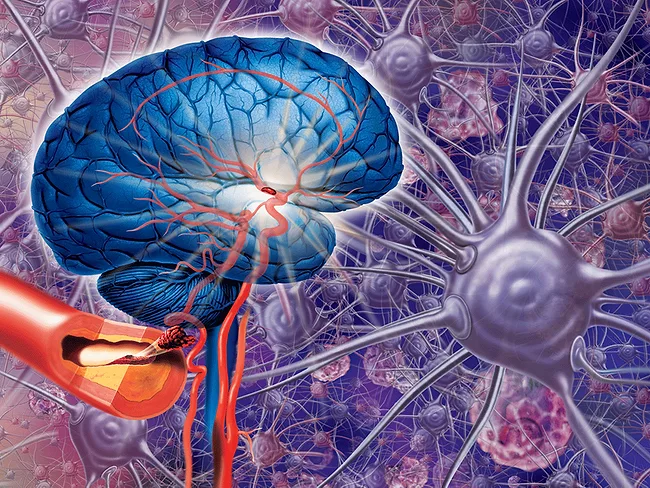
Solute carrier family 2, member 5 (GLUT5) is known to be upregulated in metabolic disorders and cancer, but its potential role in ischemic stroke is not well defined. Japanese researchers have now explored the association of GLUT5 expression with oxidative stress in ischemic stroke.
Haisco Pharmaceutical Group Co. Ltd. has disclosed new muscarinic M4 receptor agonists described as potentially useful for the treatment of substance abuse and dependence, Alzheimer’s disease, pain, schizophrenia and sleep disorders.
Alterity Therapeutics Ltd. has divulged salts of ATH-434, the company's oral agent designed to inhibit the aggregation of pathological proteins implicated in neurodegeneration.
Acute ischemic stroke still represents a public health challenge due to its high incidence and mortality rate. Current treatments may effectively restore the blood flow, but recanalization by opening occluded vessels does not guarantee a favorable prognosis.
Shenzhen Hanlin Biomedical Technology Co. Ltd. has identified new urolithin A derivatives. They are reported to be useful for the treatment of neurological disorder, aging, muscle disorder and metabolic diseases.
Work at Alicorn Pharmaceutical Co. Ltd. has led to the synthesis of new sodium channel protein type 10 subunit α (SCN10A; Nav1.8) blockers. They are reported to be useful for the treatment of pain, respiratory and neurological disorders.
Connecta Therapeutics SL has discovered 3-phenoxy-3-phenylpropanamine derivatives described as potentially useful for the treatment of fragile X and Rett syndrome.
Researchers from the University of São Paulo (Brazil) first proposed using eccentric training as a promising intervention to address musculoskeletal impairments associated with Marfan syndrome. Eccentric training is a form of resistance exercise that focuses on muscle lengthening under load and can induce robust skeletal muscle adaptations, including the attenuation of muscle wasting, promotion of myofiber hypertrophy and stimulation of satellite cell activation and proliferation, as previously demonstrated.
Amyotrophic lateral sclerosis (ALS) is a severe neurodegenerative disorder with unknown etiology, leading to loss of upper and lower motor neurons, muscle paralysis, and, eventually, death. In the majority of cases (about 90%), the disease is sporadic, while the rest have a genetic component.
 RSS
RSS