Montara Therapeutics Inc. has received $8 million seed financing from several investors to further its development of its ’binary pharmacology’ for diseases of the brain.
Alkira Bio, a new spinout from Australia’s Florey Institute of Neuroscience and Mental Health has emerged from stealth mode thanks to seed funding from Curie.bio. Although the amount of funding is not disclosed, Curie.bio typically invests $5 million to $10 million in a founder company and then co-pilots the drug discovery program, deploying drug development experts to its portfolio companies to help navigate decision making as part of the deal, Florey researcher turned Alkira Bio CEO Daniel Scott told BioWorld.
Sunbird Bio Inc.’s Neural EV-tau aggregate assay demonstrated 92% correlation with PET scans in identifying individuals with Alzheimer’s disease, a study presented at the Alzheimer’s Association International Conference in Philadelphia, on July 30 found.
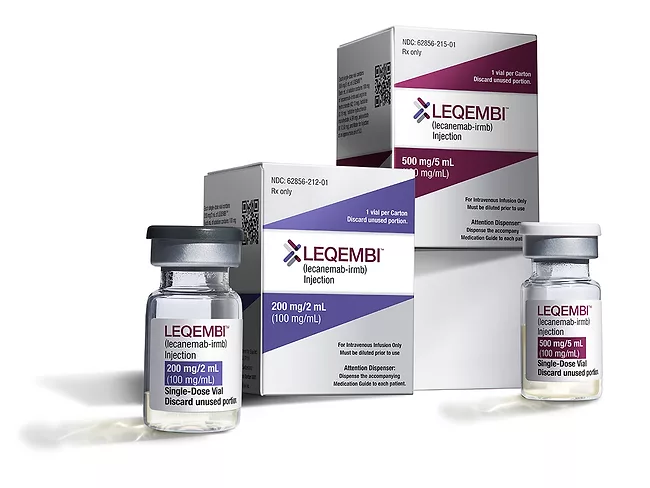
The EMA’s Committee for Medicinal Products for Human Use (CHMP) recommended approval of 14 drugs and the extension of the label of 11 others at its July meeting, but, inevitably, it was the decision to turn down the Alzheimer’s disease therapy Leqembi (lecanemab) that stirred the greatest reaction.
Alkira Bio, a new spinout from Australia’s Florey Institute of Neuroscience and Mental Health has emerged from stealth mode thanks to seed funding from Curie.bio. Although the amount of funding is not disclosed, Curie.bio typically invests $5 million to $10 million in a founder company and then co-pilots the drug discovery program, deploying drug development experts to its portfolio companies to help navigate decision making as part of the deal, Florey researcher turned Alkira Bio CEO Daniel Scott told BioWorld.
Haisco Pharmaceutical Group Co. Ltd. has discovered sodium channel protein type 10 subunit α (SCN10A; Nav1.8) blockers reported to be useful for the treatment of pain.
DeepSA, an edit-based generative framework that utilizes deep simulated annealing (SA), was used to develop novel local anesthetics with multiple activities. Researchers from Sichuan University applied DeepSA to generate over 400 analogs of the local anesthetic articaine.
C2N Diagnostics LLC’s two-factor blood test, Precivity AD2, showed 90% accuracy in diagnosing Alzheimer’s disease in a study presented at the Alzheimer’s Association International Conference in Philadelphia on July 28 and simultaneously published in the Journal of the American Medical Association. The following day, Quanterix Corp. presented results from its study that showed a multi-marker approach could maintain the 90% accuracy of its Lucentad test, while reducing the percentage of uncertain results from more than 30% to 10%, in line with the intermediate results demonstrated by Precivity.
Cognition Therapeutics Inc. said it is moving to the next stage of clinical testing with oral, small-molecule candidate CT-1812, despite phase II efficacy results falling short of statistical significance in patients with mild to moderate Alzheimer’s disease and sending shares of the Purchase, N.Y.-based company (NASDAQ:CGTX) falling 44%, or $1.04, to close July 29 at $1.33.
Researchers from Universite de Sherbrooke and University of California San Francisco presented the discovery and preclinical characterization of CCR2-targeting pepducin, PP-101.
 RSS
RSS