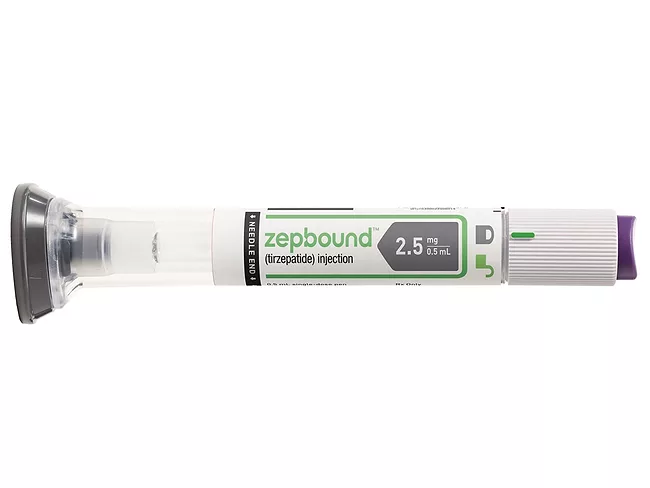
Astrazeneca plc will pay up to $2 billion for Eccogene Co. Ltd.’s oral weight loss candidate, ECC-5004, as big and small pharma players alike work to gain ground in the burgeoning obesity market where Eli Lilly and Co. scored the latest U.S. FDA approval of Zepbound (tirzepatide).
Orsobio Inc., already in the clinic with three candidates, has completed its $60 million series A financing. The company, CEO Mani Subramanian told BioWorld, has taken its time to find the right programs, put them together and only raised capital when it saw the programs had legs. Even the series A is a measured step, as Subramanian called the financing “modest.”
A year-and-a-half after Eli Lilly and Co.’s Mounjaro (tirzepatide) gained U.S. FDA approval for adults with type 2 diabetes, the GLP-1 and GIP dual agonist was cleared for chronic weight management in adults who are obese or overweight and who also have one related condition.
Fake versions of Novo Nordisk A/S’ 1-mg Ozempic prefilled pens are sounding alarms in Europe amid an ongoing shortage of the company’s semaglutide products resulting from demand in the weight-management space.
Novo Nordisk A/S’ semaglutide is making headlines again this week, with a phase IIIb testing the ubiquitous GLP-1 agonist on kidney outcomes halted early for efficacy. The independent data monitoring committee for the trial, dubbed Flow, concluded results from an interim analysis met prespecified efficacy criteria. Final data will read out in the first half of 2024.
Glucagon-like peptide 1 receptor agonists have brought significant weight loss to patients, catching the attention of investors, but drug developers are continually seeking new therapies with different mechanisms to enhance the effects and improve the tolerability.
The ability of obesity medications to impact co-morbidities, reducing the symptoms and costs associated with down-the-road disease, has attracted significant attention throughout the biopharma industry.
The multibillion-dollar market potential for obesity medications that analysts expect in the next decade signifies change is afoot for a patient population historically plagued with unsafe options and generally dismissed by investors and insurers. While glucagon-like peptide 1 receptor agonists have paved the way – offering hope-filled patients the first significant non-surgical weight loss benefit upwards of 15% – only a small portion of the obesity population and certain overweight patients are treated with medication, and even a smaller percentage receive insurance reimbursement.
The multibillion-dollar market potential for obesity medications that analysts expect in the next decade signifies change is afoot for a patient population historically plagued with unsafe options and generally dismissed by investors and insurers. While glucagon-like peptide 1 receptor agonists have paved the way – offering hope-filled patients the first significant non-surgical weight loss benefit upwards of 15% – only a small portion of the obesity population and certain overweight patients are treated with medication, and even a smaller percentage receive insurance reimbursement.
Structure Therapeutics Inc.’s stock climbed 34.6% following a readout of what analysts call “competitive” and “exceptional” phase Ib data at 28 days of oral small-molecule glucagon-like peptide 1 (GLP-1) receptor agonist GSBR-1290 in healthy overweight or obese individuals. Shares (NASDAQ:GPCR) rose $12.95 to close Sept. 29 at $50.42. At the same time as the data readout, the San Francisco-based company agreed to a $300 million private placement with several large health care institutional and mutual fund investors, extending Structure’s runway through the end of 2026.
 RSS
RSS