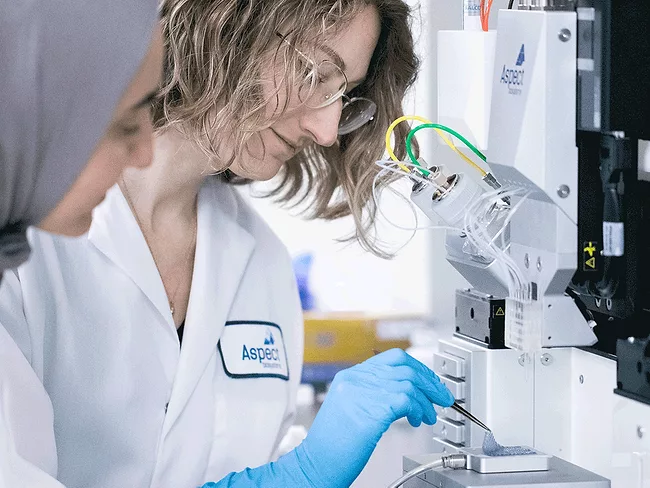
In collaborating with Novo Nordisk A/S, privately held Aspect Biosystems Ltd. entered its biggest ever deal that could bring in more than $2.6 billion while advancing its 3D, bioprinted tissue therapeutics technology. The two companies will collaborate to develop up to four diabetes and/or obesity products, a Novo specialty, using implantable bioprinted tissues to replace, repair or supplement human biological functions. The initial target will be type 1 diabetes.
Metabolic health is at an odd juncture. With the advent of glucagon-like peptide (GLP-1) agonists, pharmacologically induced weight loss has matured into a viable therapeutic option at long last. GLP-1R agonists, which are also called incretin mimetics and GLP-1 analogs, are likely to continue their success across multiple areas of medical care. Already, the class has transformed diabetes care, making a splash in weight management, and it may yet do the same for other indications.
Leveraging a computational platform designed to exploit the full potential of a widely studied pharma target has proved successful in attracting venture investors in the last few years to Structure Therapeutics Inc. The company now is giving the public markets a go, aiming to raise up to $100 million in what marks the first biopharma U.S. IPO filing for 2023.
Metabolic health is at an odd juncture. With the advent of glucagon-like peptide (GLP-1) agonists, pharmacologically induced weight loss has matured into a viable therapeutic option at long last. And research into the drug class is continuing apace.
A phase II trial this week showed that combining the diabetes drug semaglutide (Novo Nordisk A/S) with a fixed-dose combination of Cagrisema (cagrilintide/semaglutide) led to “numerically higher” reductions in both HbA1c and body weight than either component alone. And on the preclinical side, researchers from the Novo Nordisk Research Center and the Helmholtz Diabetes Center reported that linking the dual PPAR activator tesaglitazar to GLP-1 improved glucose control in male mice. Both bits of news illustrate that GLP-1R agonists, which are also called incretin mimetics and GLP-1 analogs, are likely to continue their success across multiple areas of medical care.
Carmot Therapeutics Inc. has raised $160 million in series D financing to support a trio of early to midstage clinical programs focused on treating diabetes and obesity with peptide-based small-molecule incretin receptor modulators.
Investigators at Stanford University and Baylor College of Medicine have identified an exercise-induced appetite suppressant that led to weight loss when administered to obese mice. The molecule, Lac-Phe, has led to predictable excitement around the possibility of appetite-suppressing exercise in a pill.
Eli Lilly and Co.'s tirzepatide, a high-profile entrant in the global anti-obesity race, hit a key milestone, becoming the first investigational medicine to deliver more than 20% weight loss on average for non-diabetics in a phase III study, said Jeff Emmick, vice president of product development at the company.
Kallyope Inc., a company leveraging connections between the gut and brain to develop new medicines for diabetes, obesity and other diseases, has raised $236 million in series D financing to support its work. Readouts of early clinical data for its most advanced programs, phase I small molecules for metabolic disease and gut barrier conditions, will start to arrive later this year, company CEO and President Jay Galeota told BioWorld.
Shares of Cohbar Inc. (NASDAQ:CWBR) hit a 52-week high on Aug. 11 following news that a mitochondrial peptide analogue it is testing for the potential treatment of nonalcoholic steatohepatitis (NASH) and obesity, CB-4211, delivered "robust" improvements in key biomarkers of liver damage and glucose levels vs. placebo during a small phase Ia/Ib study.
 RSS
RSS